
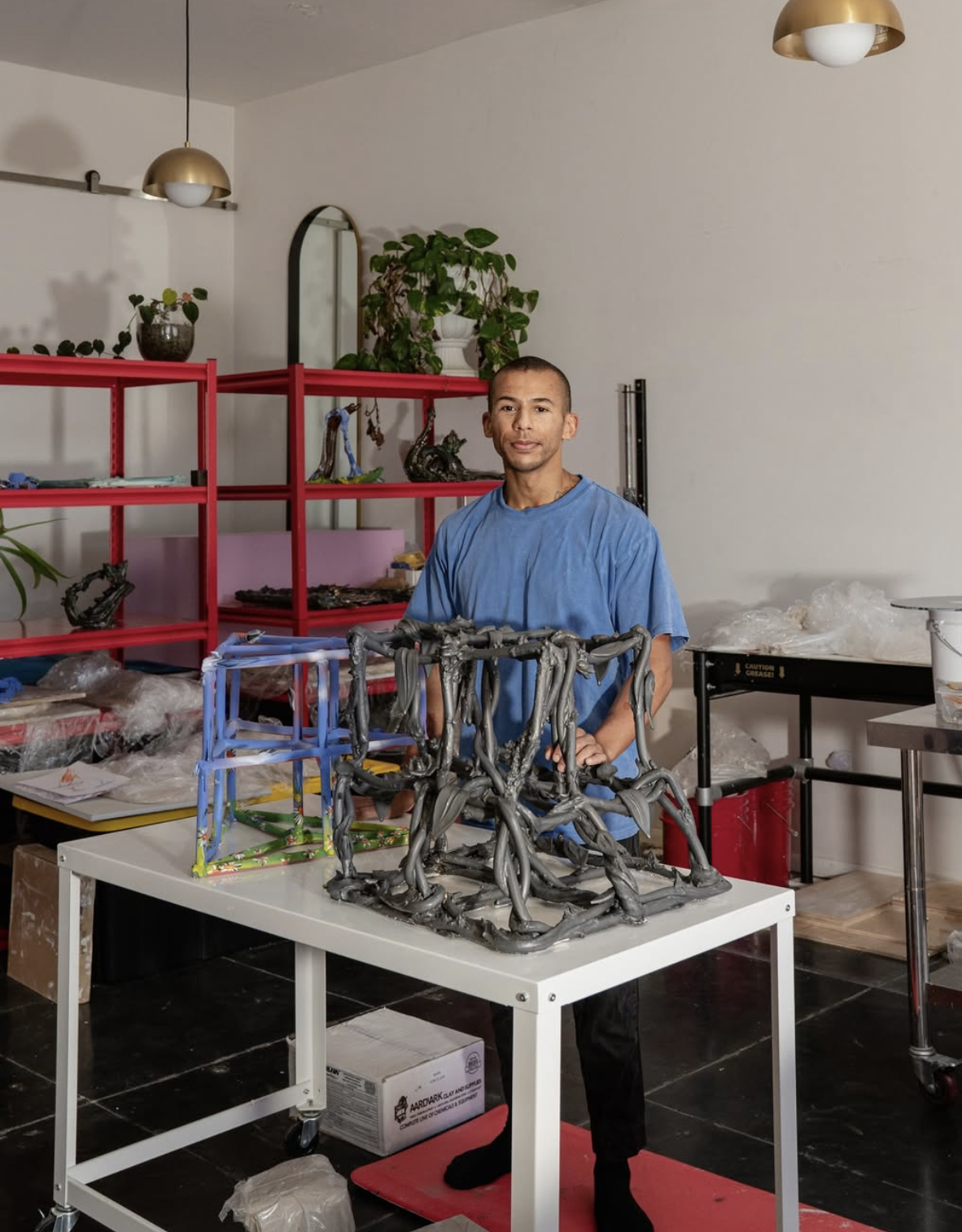
ALEX ANDERSON
The first time I saw Alex Anderson’s work, my reaction was pretty simple: What exactly am I looking at?
Then very quickly, this is cool as hell.
There are flowers, gold drips, body parts, thorns, animals, mirrors, faces, decorative frames and forms that are sometimes recognizable and sometimes completely abstract. Some pieces look expensive, some look cute, others are strange, funny, a little grotesque, or somehow all of those things at once.
Anderson works primarily in ceramics, but looking through his practice feels much bigger than looking at a collection of ceramic objects. There are pieces that feel sculptural, architectural, painterly, almost illustrative. Small scenes and fragments of life appear inside larger forms. The longer you look, the more you realize that all the whimsy is carrying much heavier conversations about race, sexuality, colonialism, beauty and who gets to decide what has artistic value and that was the part that made me want to know more.
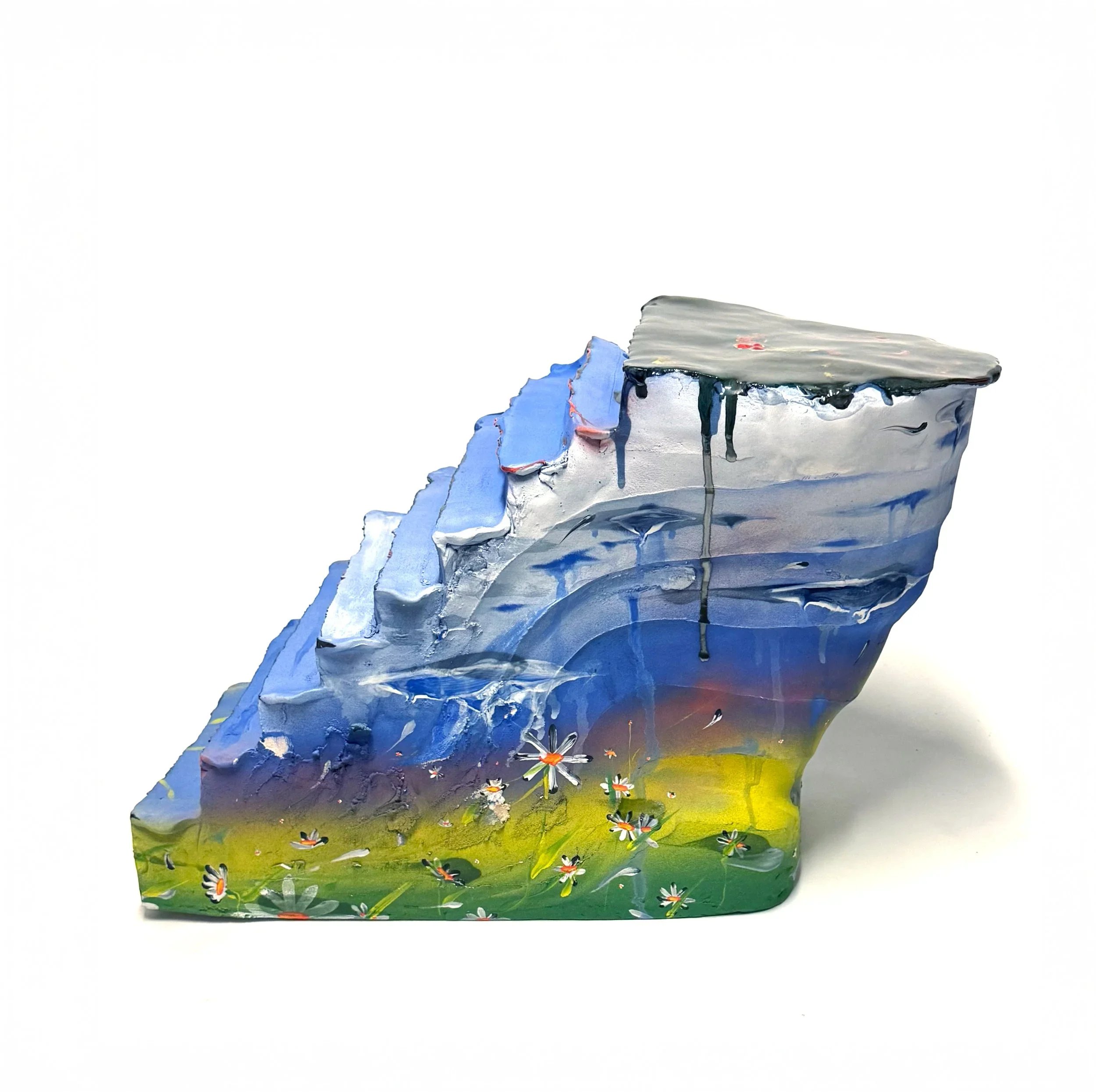
ALEX ANDERSON | CLOUD STAIRCASE (2024)
WHO IS ALEX ANDERSON?
Born in Seattle in 1990, Alex Anderson is a Black and Japanese American ceramic artist who currently works between Seattle and Los Angeles. He received his BA in Studio Art and Chinese from Swarthmore College and later earned his MFA in Ceramics from UCLA. His education also took him to China, where he studied at the Jingdezhen Ceramic Institute before later returning as a Fulbright Scholar affiliated with the China Academy of Art.
Ceramics has been part of his life since high school. He has said he took his first ceramics class and simply never stopped, but studying in China seems to have changed the way he understood what the material could actually do. He described that period as the moment he realized ceramics could give him “a lifetime of work,” because clay could take essentially any form.
Anderson does not seem particularly interested in respecting the boundaries of what a ceramic object is supposed to look like. His sculptures pull from Baroque decoration, Japanese pop art, surrealism, fashion, African American visual culture and the history of porcelain itself. There is a lot happening and that kinda seems to be the point.
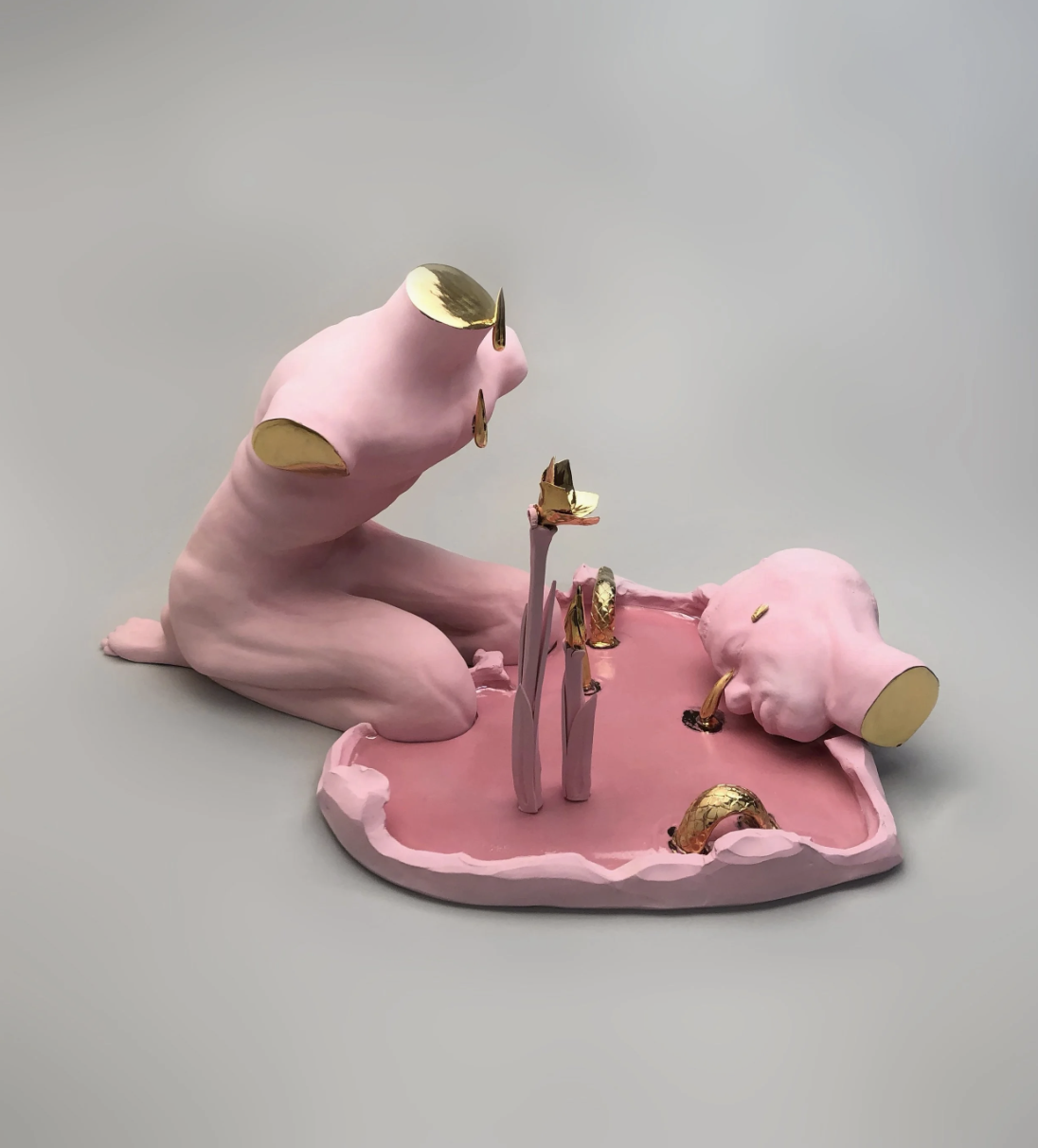
ALEX ANDERSON | Narcissus (2020)
PRETTY, WEIRD AND LOADED
At first glance, Anderson’s work can be very pretty because there is glossy decorative detailing and all the visual language we have been taught to associate with beauty, luxury and good taste. Then you start to immediately notice the weirdness, like the dismembered body parts or flowers with teeth and all the forms start melting into each other.
Anderson’s Black, Japanese and gay identities are central to the work, particularly in the way he uses aesthetics that have historically been separated or ranked against one another. Western classical imagery can sit beside camp, femininity, Japanese pop culture and Black vernacular without any one of them being treated as more legitimate than the others.
That mixture feels especially interesting when you consider the history of porcelain itself. Ceramics has long been tied to empire, trade, wealth, collecting and ideas about refinement. Anderson is taking a material already carrying all of that history and using it to talk about the people and identities those same systems have marginalized, fetishized or excluded. There is something almost paradoxical about him using the language of luxury to question the people who created the rules around luxury in the first place.
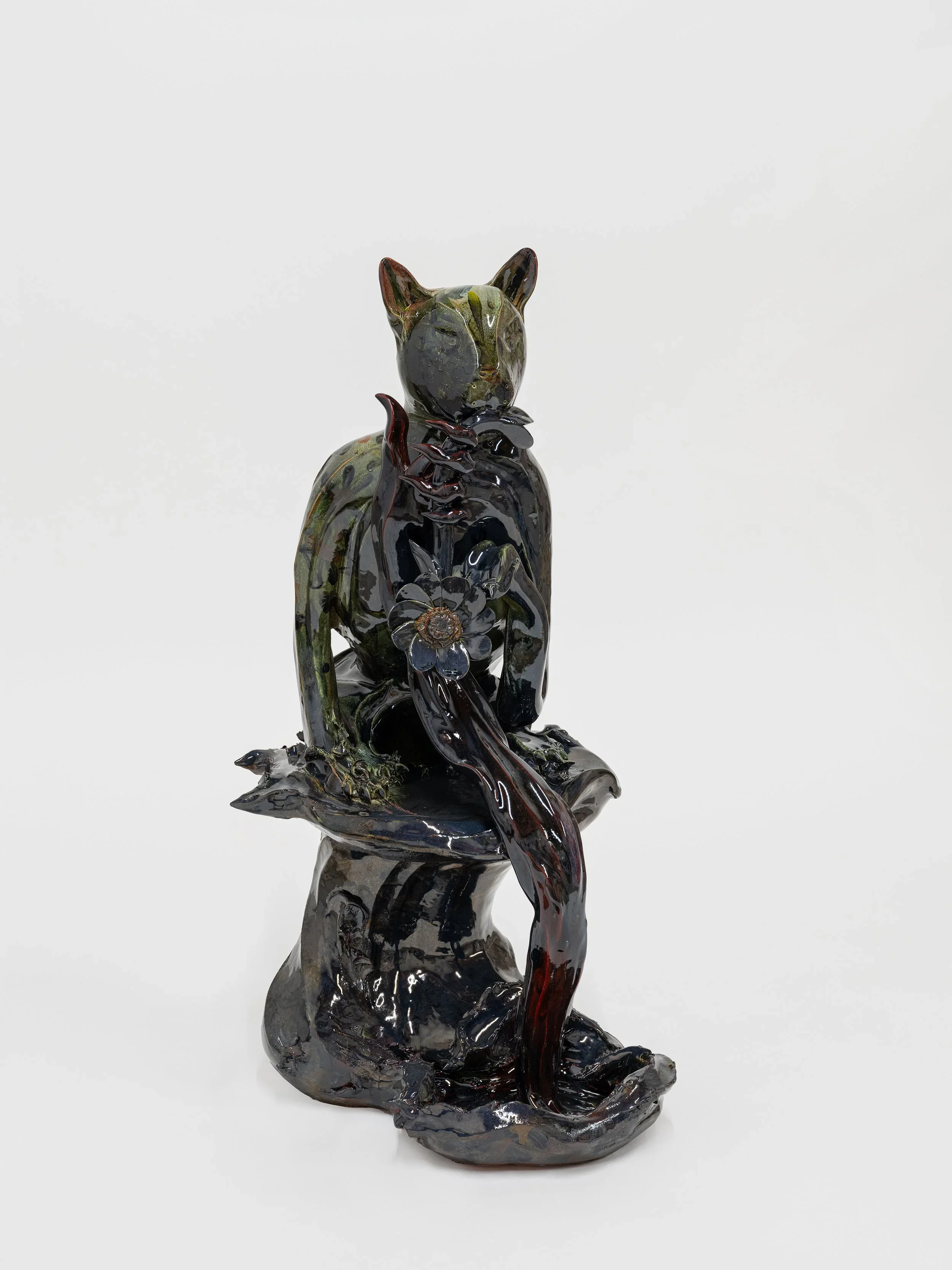
ALEX ANDERSON | Make friends with suffering (2024)
WHY CERAMICS?
One thing Anderson has spoken about is the frustration of ceramics historically being dismissed as decoration or craft rather than treated with the same seriousness as other forms of fine art.
He has said that one of his biggest challenges was believing his own work could have significance beyond himself in a world that often relegated ceramics to decoration.
That makes his choice to make the work so decorative even more interesting; instead of rejecting beauty to prove the work is serious he piles more of it on and then uses all of those things to talk about power. That feels much more interesting than pretending decoration has no intellectual value.
Anderson seems to understand that beauty itself can carry politics. What society decides is elegant, vulgar, tasteful, feminine, excessive or valuable has never been neutral and ceramics gives him a perfect material for that conversation because it is both precious and breakable. You can spend weeks creating something that looks permanent and destroy it in seconds.
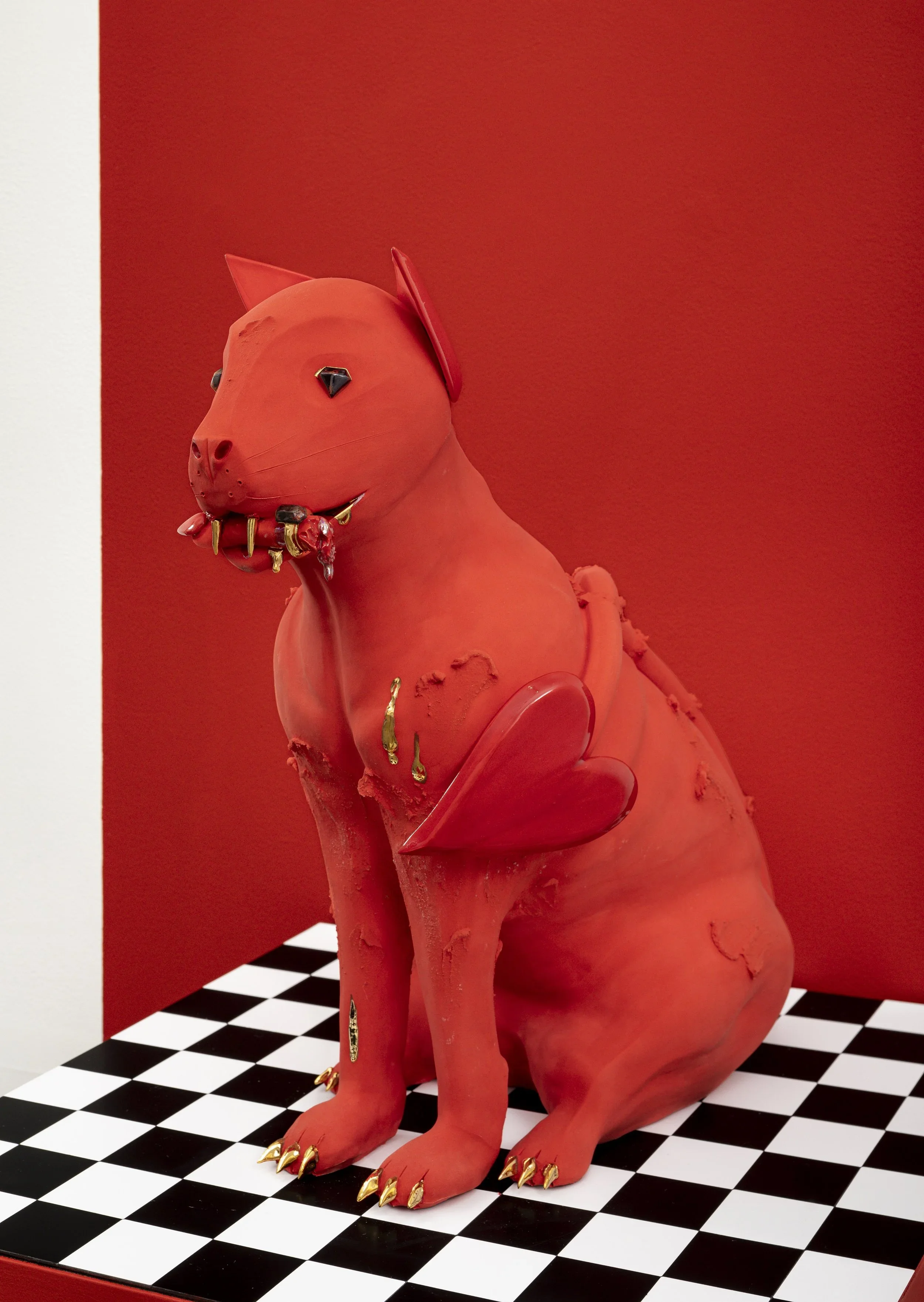
ALEX ANDERSON | I like your ring. Can I have it? (2023)
POST-BLACK, POST-COLONIAL, POST-"CERAMICS ARE JUST DECORATION”
Anderson’s work has often been discussed through Post-Blackness, which makes sense, he is very clearly making work informed by being Black but he is not interested in producing one easily recognizable version of “Black art.” Race exists beside queerness, Japanese heritage, art history, fashion, humor, beauty and whatever else he wants to pull into the work because that freedom is important to him. It allows him to talk about identity without reducing himself to explaining his identity.
His sculptures can reference racial politics and imperialism while still being funny. They can also deal with fetishization and violence while being covered in flowers. Those contradictions are probably one of the strongest things about the work because nothing has to choose one side.
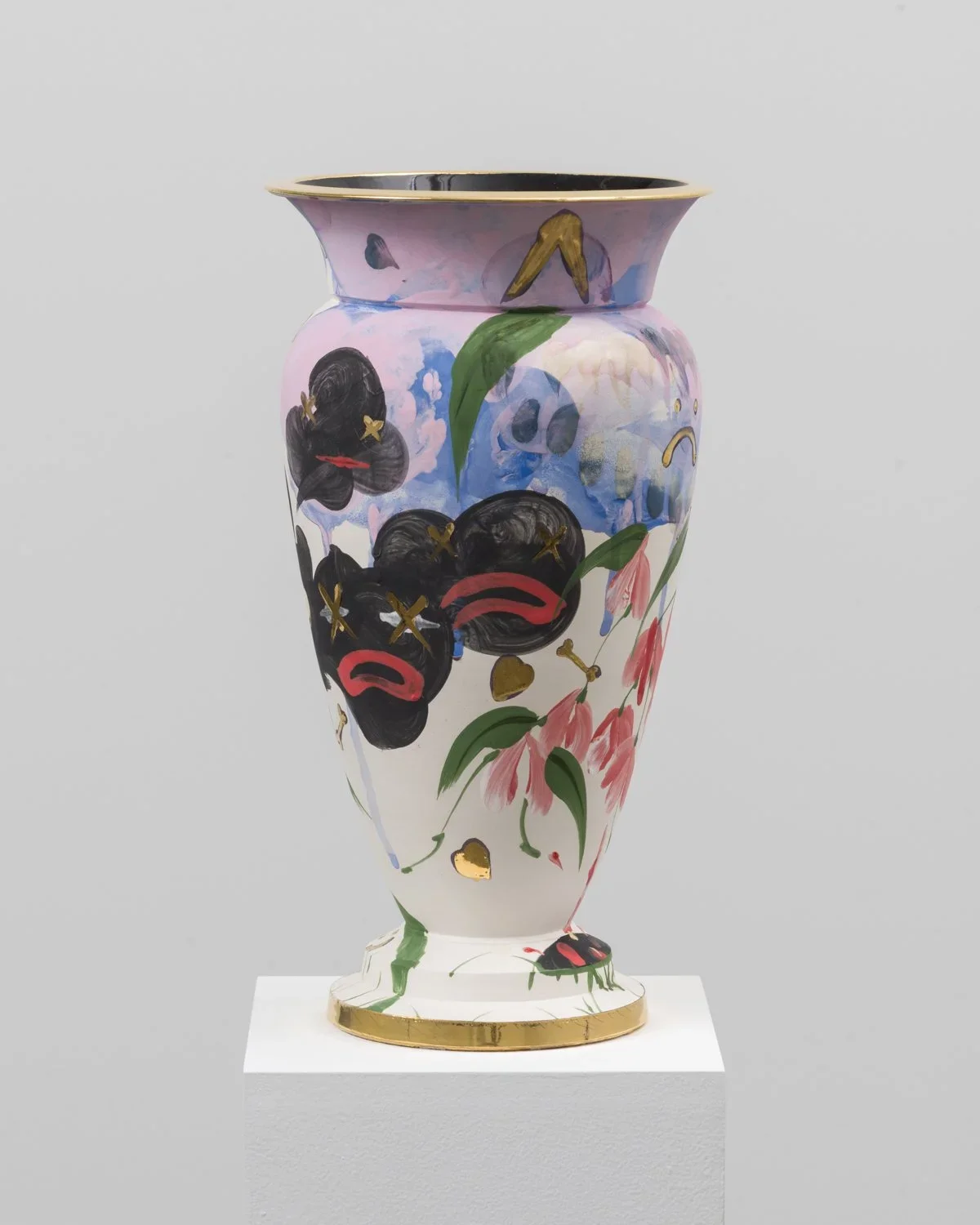
ALEX ANDERSON | Dream Vessel I (2019)
Alex Anderson is exactly the kind of artist that makes Black Art Appreciation fun for us. Yes, there are serious ideas in the work like post-colonialism, race, sexuality, art history, imperialism and an entire conversation about ceramics as a medium. But before any of that, the work is just really fucking cool. You want to look at it, you want to figure out how it was made, that curiosity matters in art appreciation.
There should be room in Black art for work that is strange, funny, decorative, conceptual, excessive, beautiful and difficult to immediately explain. Alex Anderson makes all of those things coexist and somehow, it works.
Sources
Alex Anderson. CV. Official Artist Website.
Brackers Good Earth Clays. Alex Anderson.
Gallery COMMON. Alex Anderson.
Make Room Los Angeles. Alex Anderson: Shape of Life. May 30–July 12, 2025.
Artsy. Alex Anderson. Artist Profile.
ArtisT Name: Alex Anderson
Based: Seattle, Washington & Los Angeles, California
Website: alexalexalexalex.com
Instagram: @100alexanderson