
Our feeds are personalized, but being predicted is not the same as being understood. What happens when recommendation systems start shaping not only what we see, but what we consider worth liking, referencing and making?
by Elyon Akpenyi
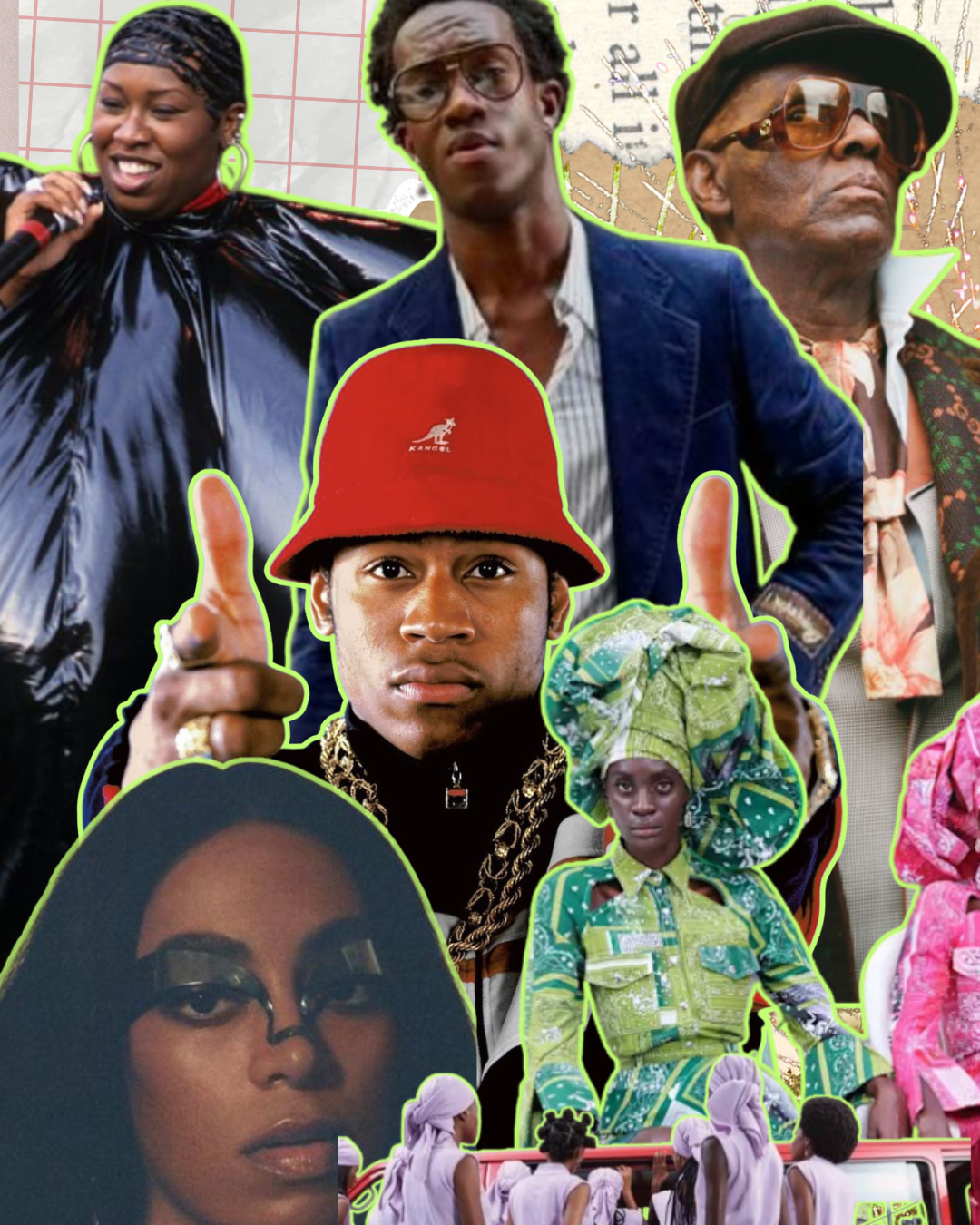
When you clock in for your daily social media scrolling shift, are you seeing the things you actually want to see or are you just seeing whatever pops onto your feed first? Because everyone's feed is described as “personalized,” we assume the things repeatedly placed in front of us must reflect who we are, but how much truth actually lies in that? Who owns these platforms? What do they gain from deciding what reaches us? And how can we, as individuals, regain autonomy over our own taste in the age of the increasingly opaque algorithm?
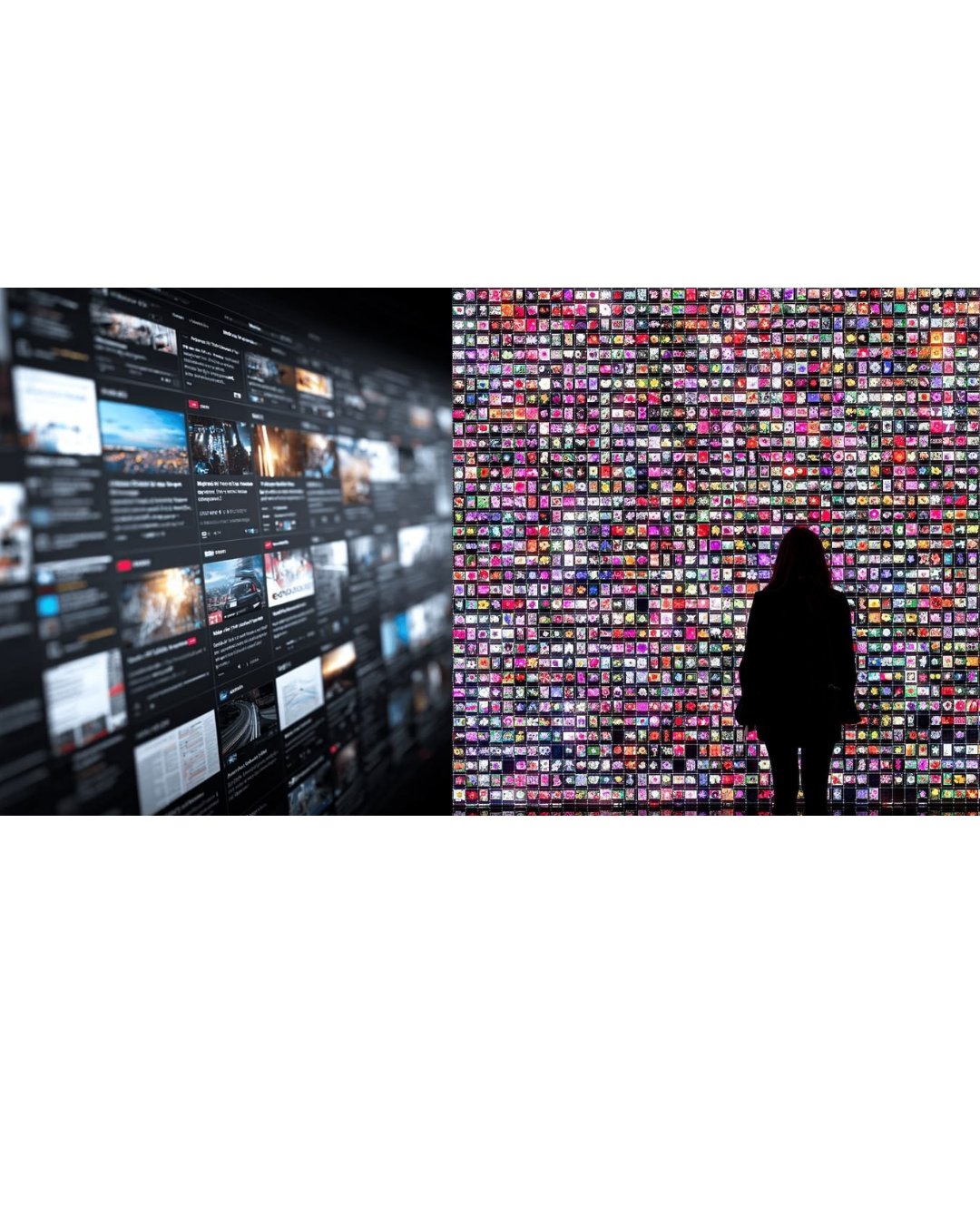
WHAT IS “THE ALGORITHM?”
In plain and simple terms, an algorithm is a set of instructions that we give to a computer to have it create a set of results for us, but they run every dimension of how we experience the internet. (Noble, 2025) For clarity purposes, when we say “the algorithm,” we are not referring to some dictator internet overlord that controls everything we like and comment on. There actually isn’t one singular algorithm running your feed, but multiple, and each platform makes use of different algorithms and models that interpret signals from your activity, make predictions about your interests and rank what you see accordingly.
Now, let’s dive a little into what I consider to be the “Big 4” of algorithmic content distribution, and how their own recommendation systems work to shape what we see and are exposed to:
TikTok’s “For You Page (FYP)” considers user interaction, video information, device and account settings. When you first get started, you have the option to select some categories of general interest, or be flooded with viral videos, and then your first set of likes, comments and watch behavior shape your FYP as the TikTok recommendation system begins to learn your taste. (TikTok, 2020) TikTok itself acknowledges the risk of a “filter bubble” when recommendations become too personalized, and helps diversify content by showing you things you might not be interested in. How useful. You can also see why a particular video is recommended to you when you hit share and then the question mark icon called "Why this video?" from there you’ll probably come across reasons such as your user interactions, accounts followed/suggested or popular content in your region. (TikTok, 2022)
Meta uses AI systems to understand semantics across different modalities such as audio, text and images, and then uses a retrieval system to narrow down billions of pieces of content, to a person’s interest. (Meta AI, 2023) After that, their AI system predicts how valuable a piece of content might be to you, to show you sooner. How they are able to predict this perceived value is for instance shares or saves, since that usually indicates something is important or interesting to you, but the system still does not know the personal context behind why you shared or saved it in the first place. (Clegg, 2023)
YouTube says it starts with the knowledge that its users have unique viewing habits, but then compares those habits to people it considers similar to you and uses what those users watch and enjoy to decide what else you may want to see. So while the viewing habits may not be identical, the recommendation pool is still being shaped through behavioral overlap. (Google, n.d.) They also rely on signals such as watch history, search history, subscriptions, likes, dislikes and surveys. But different features rely on different signals, for example what you’re watching determines what comes up next, and your watch history determines what is recommended on your homepage. Interestingly enough, AI content is distributed just as widely as non-AI content. (Google, 2026) But the recommendation system is responsible for a significant amount of the overall viewership on YouTube, even more than channel subscriptions or search (Goodrow, 2021)
For Pinterest, the platform is mainly split between the Home and Explore feeds. The home feed is curated from boards you've created, your searches and pins you’ve interacted with. While your explore feed is literally just what’s trending on Pinterest at the moment. (Pinterest, n.d.)
WHO GETS TO DECIDE?
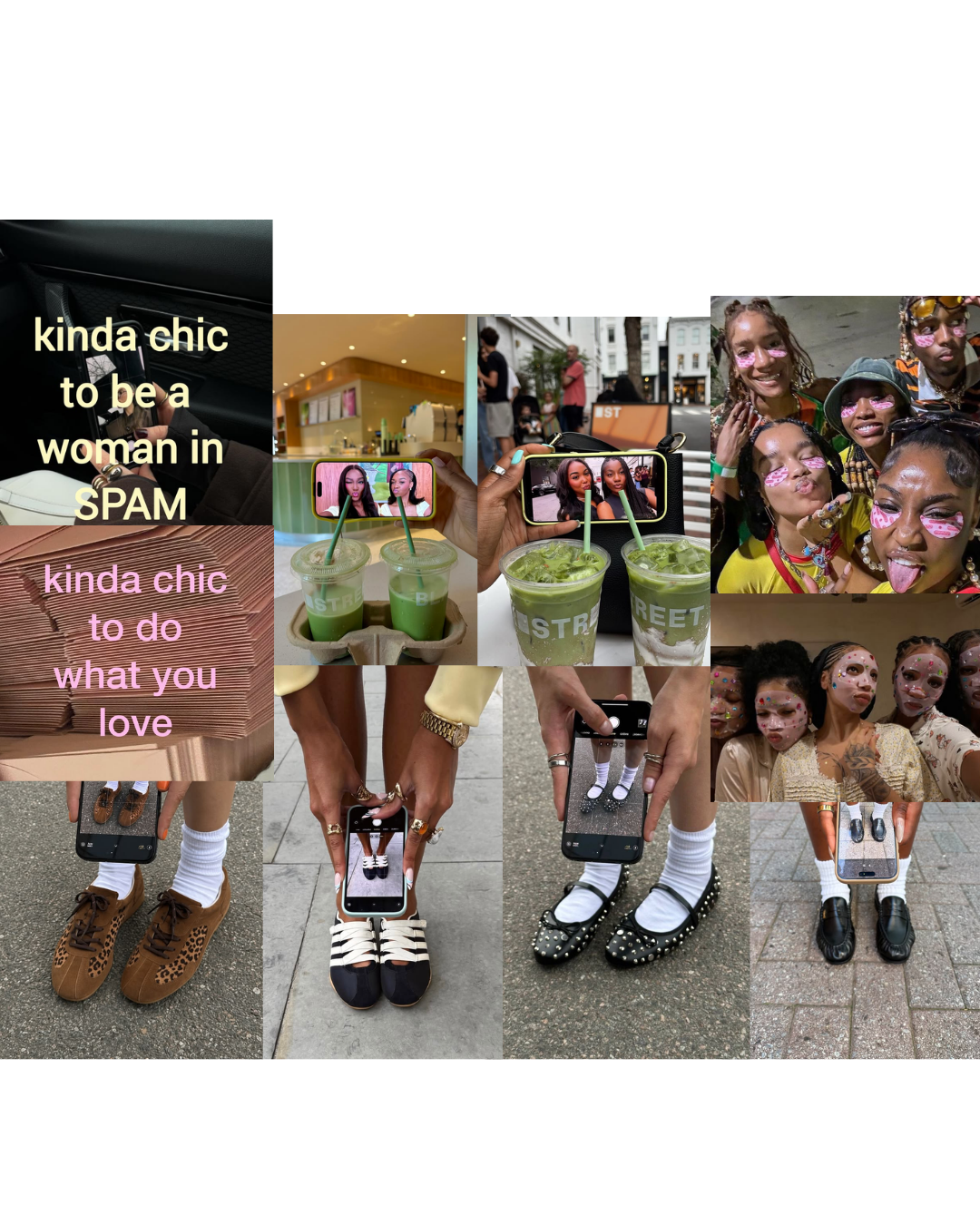
Across all four platforms, the pattern is more or less the same, they observe what we do, turn that behavior into signals, and then use those signals to decide what they think we should see next. But being predicted is not the same as being understood. The system knows that you paused on an image, it does not know whether you found it beautiful, strange or useful for a project because the system is predicting what is valuable, not experiencing the actual value. It converts behavior into data, uses that data to choose what you see next. Something comes on your feed, you’re drawn to it, and then all of a sudden you notice 5,000 other people are too, and by next week someone is making a video calling you all sheep. If my behavior teaches the system what to show me, and what the system shows me affects my future behavior, where exactly does my “personal” taste end and the recommendation loop begin? At some point, the machine is no longer simply learning your taste, but actually has a very active role in helping to form it as well.
Taste is not an innocent, individual choice or a natural gift. Instead, it is socially structured and tied to an individual's class position. Dominant classes use taste as a tool of symbolic violence and exclusion to maintain their high social standing and reinforce class inequalities. (Bourdieu, 1984) Taste has always been socially conditioned. Money, class, education, access and the people around you affect what you know enough to even develop opinions about. The algorithm did not invent influence. What has changed is the scale, speed, opacity and commercial incentive behind that influence. That still leaves the bigger question of who is actually making these decisions, because algorithms do not exist in a vacuum and neither do the companies that build them. These platforms are businesses, not neutral public utilities, and their recommendation systems are shaped by the goals of the companies that own them, which means understanding how taste gets filtered online also requires understanding who benefits from that filtering in the first place. Tressie McMillan Cottom’s “Where Platform Capitalism and Racial Capitalism Meet” is especially useful in this conversation because she pushes us to look past the technology itself and toward the economic and social systems it operates within. These systems influence what becomes visible, desirable and culturally valuable, which is why who owns them matters. To paraphrase Kamala Harris, “you think [the algorithm] just fell out of a coconut tree?[...]” The algorithm exists in the context of the companies that created it, the economic incentives they operate under, the people who program it, the data it learns from, and the society that produced all of the above. The companies operating TikTok, instagram, YouTube, and Pinterest are not building recommendation systems solely because they are interested in helping us discover things we love. Our attention has economic value, and the better these companies become at predicting what keeps us engaged, the more valuable their platforms become.
INSPIRATION VS. IMITATION
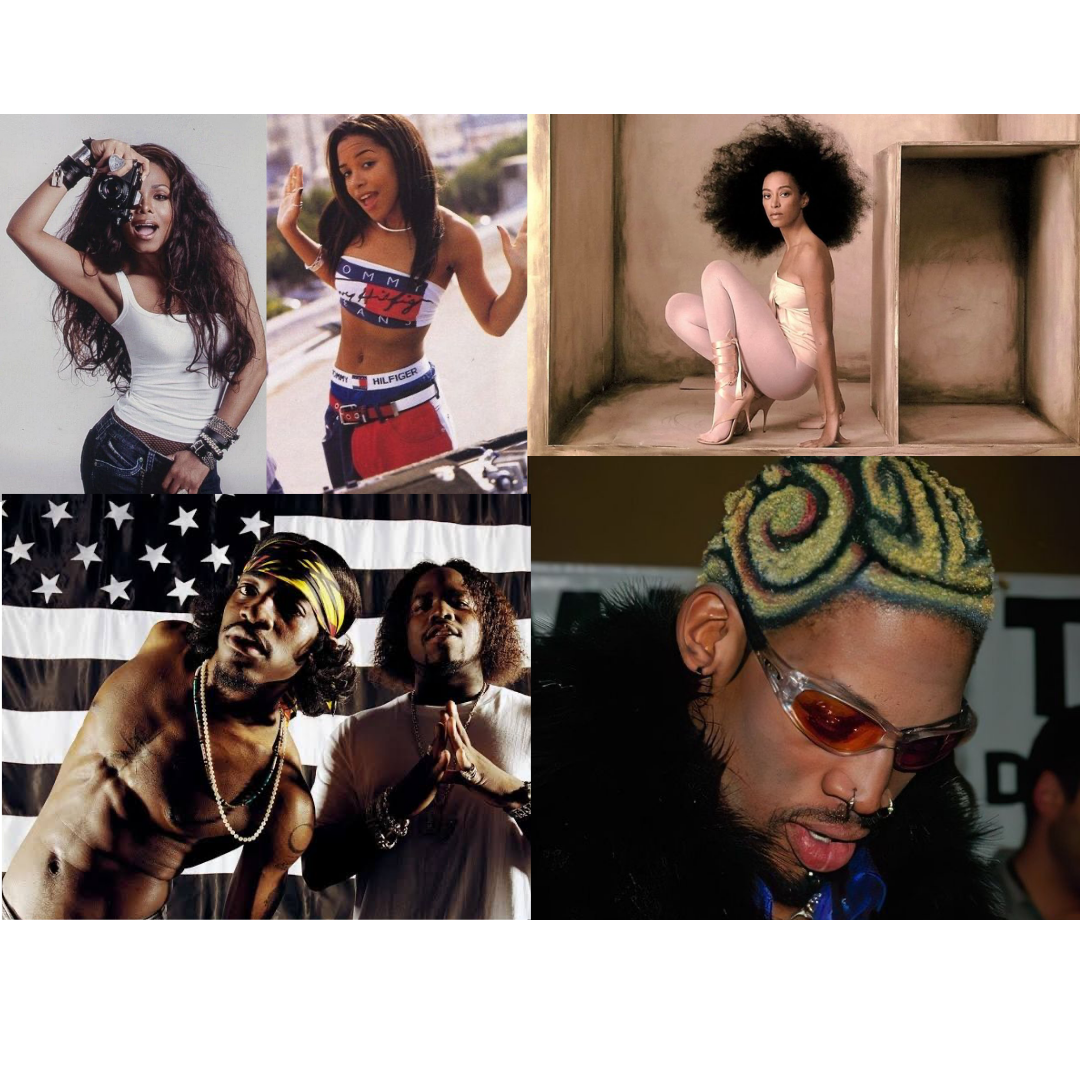
Once these platforms get better at keeping our attention, the bigger question becomes what we actually do with everything they keep putting in front of us. We do not just consume these references, we save them, repost them, build moodboards around them, recreate them, use them as inspiration and eventually start making things that look a lot like the things we were already being shown. That is where the line between inspiration and imitation starts to get blurry, especially when the version that reaches us is already several steps removed from whoever created it in the first place. Moya Bailey and Trudy’s “On Misogynoir: Citation, Erasure, and Plagiarism” made me think differently about what we casually call “inspiration,” especially when the original creator is a Black woman whose work can circulate widely while the credit, social capital and opportunities attached to it move somewhere else. They distinguish between opportunistic plagiarism, where someone uses another person’s work because it benefits them but does not consider the originator important enough to cite, and punitive plagiarism, where opportunism is joined by an effort to erase or punish the person whose labor is being used. Generative AI makes that detachment even easier: A person can request the feel of a photographer whose name they do not know, reduce a culture to a visual effect and receive a polished result that creates the impression of intention. Once creators can see which references, aesthetics and formats repeatedly get rewarded, that knowledge starts entering the work before it is even made. Anyone trying to reach people online now has to think about hooks, formats and whether the platform will understand where to place an idea.
I run a magazine, so I am not interested in pretending distribution does not matter, but there is a difference between considering how work will reach people and allowing the logic of distribution to become the source of the idea. When creators are no longer only asking what they want to say but what kind of work the platform already knows how to reward, the result can be polished and culturally fluent while still having very little to say that belongs specifically to them. I do not think reclaiming taste means deleting every app or proving that you are too smart to be influenced, it means becoming more conscious of how your preferences are being formed and making room for interests that have not already been approved for you. Black interior life needs to be able to exist beyond constant public performance because Black culture is too often viewed through the lens of public resistance, defiance, or reaction to racism. (Quashie, 2012) Not everything you like needs to become content or proof that you are culturally informed, some ideas need time to develop before they are packaged for an audience, and some work needs privacy before metrics begin editing it.
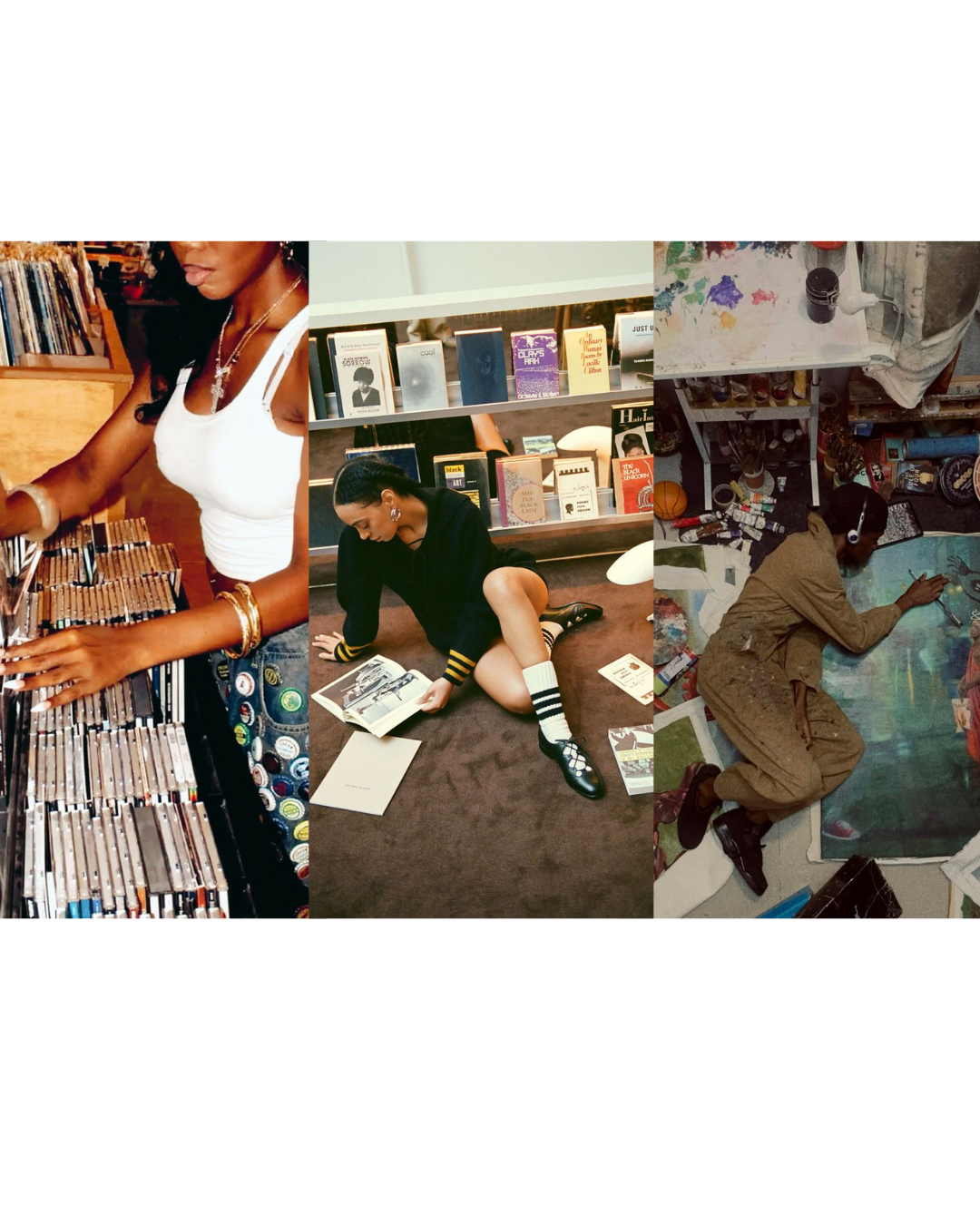
RECLAIMING YOUR TASTE
Taste is not proven by how many references you recognize, it shows in how you choose, what you return to and what you do with what has influenced you. Originality does not mean having no sources, it means understanding them well enough to transform them through your own life and the questions you care enough to keep following. The algorithm can introduce you to something, it can organize information and help you find a starting point, but it should not become the final authority on what deserves your attention or what you are capable of making.
The real danger is not that everyone will dress exactly alike or listen to the same music, it is that we become so used to being told what is relevant that we lose confidence in our ability to decide before a platform confirms it. We may become excellent at recognizing the appearance of taste, excellent at reproducing what already performs, while leaving very little evidence of what we ourselves noticed or contributed. If we outsource that judgment for long enough, we do not only risk making culture more repetitive, we risk never finding out what our own minds and God-given talents could have produced without the feed making the first decision for us.
Sources
Safiya Umoja Noble. “Decoding Algorithmic Racism with Dr. Safiya Umoja Noble.” Making Contact, 2025. Read/listen
TikTok. “How TikTok Recommends Videos #ForYou.” TikTok Newsroom, 2020. Read
TikTok. “Learn Why a Video Is Recommended For You.” TikTok Newsroom, 2022. Read
Meta AI. “The AI Behind Unconnected Content Recommendations on Facebook and Instagram.” 2023. Read
Nick Clegg. “How AI Influences What You See on Facebook and Instagram.” Meta, 2023. Read
Google. “How YouTube Recommendations Work.” YouTube Help, n.d. Read
Google. “Updates to AI Content Disclosure and Labels.” YouTube Community, 2026. Read
Cristos Goodrow. “On YouTube’s Recommendation System.” YouTube Blog, 2021. Read
Pinterest. “Explore the Home Feed.” Pinterest Help, n.d. Read
Pierre Bourdieu. Distinction: A Social Critique of the Judgement of Taste. Harvard University Press, 1984.
Tressie McMillan Cottom. “Where Platform Capitalism and Racial Capitalism Meet: The Sociology of Race and Racism in the Digital Society.” Sociology of Race and Ethnicity 6, no. 4, 2020, pp. 441–449. Read
Moya Bailey and Trudy. “On Misogynoir: Citation, Erasure, and Plagiarism.” Feminist Media Studies 18, no. 4, 2018, pp. 762–768. Read
Kevin Quashie. The Sovereignty of Quiet: Beyond Resistance in Black Culture. Rutgers University Press, 2012. Read
Kamala Harris. “Remarks at the Swearing-In Ceremony of Commissioners for the White House Initiative on Advancing Educational Equity, Excellence, and Economic Opportunity for Hispanics.” May 10, 2023. READ