
CTRL+ALT+ SYNC’s BEST DRESSED SELECTS: MET GALA 2026
The looks that understood Costume Art and “Fashion Is Art” through presence, styling, silhouette, and point of view.
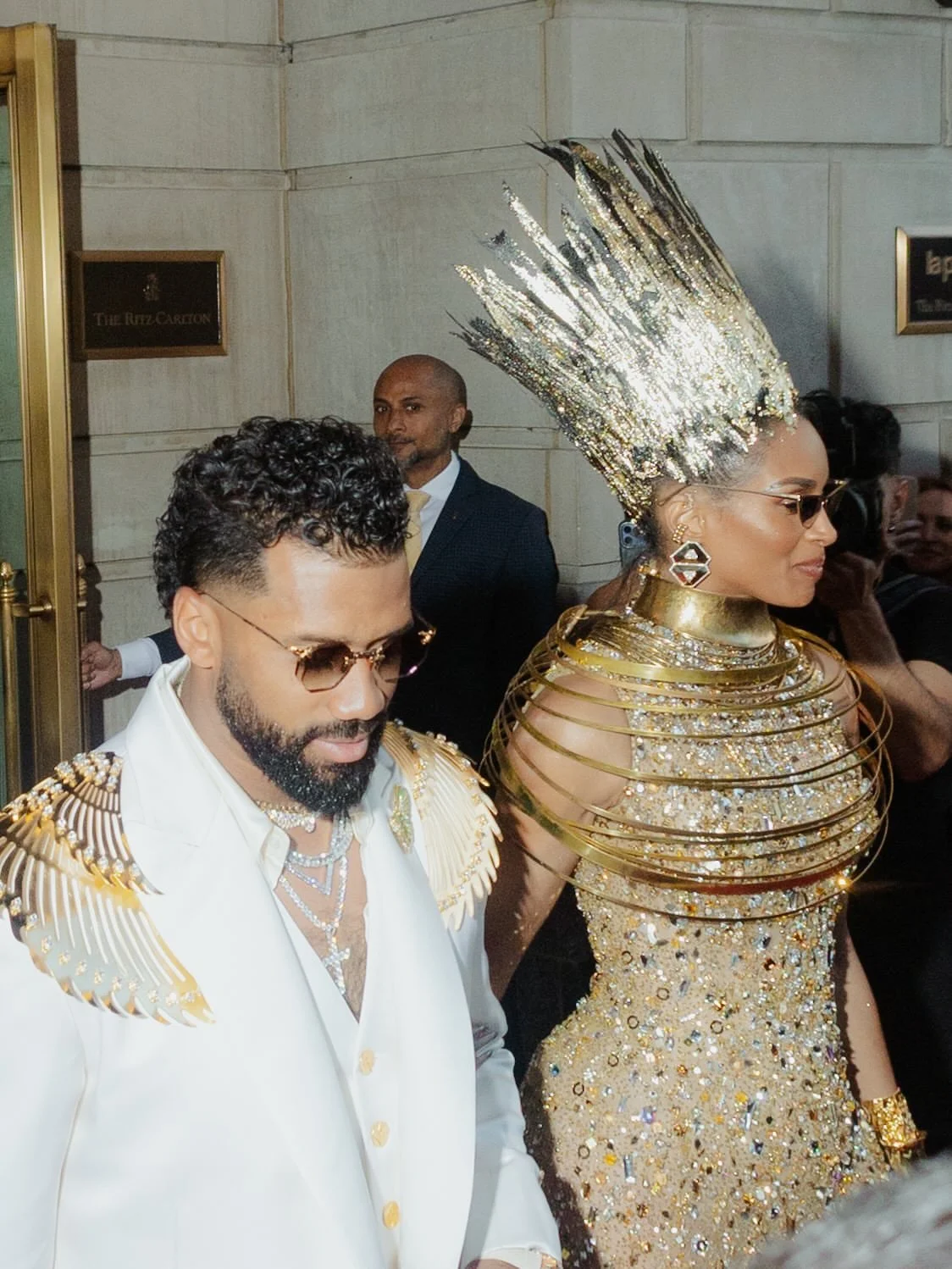
Russell Wilson and Ciara preview their Met Gala looks outside the Ritz-Carlton in NYC
This year’s Met Gala theme, “Costume Art,” explored the relationship between clothing, the body, and art history, with the dress code “Fashion Is Art.” In our Moodboard Monday study, we were looking forward to a carpet that gave us sculptural silhouettes, painterly textures, archival references, exaggerated form, body as canvas, garment as object, and styling that understood the assignment beyond just a pretty dress or a tailored tux.
So for our best dressed selects, we’re not only asking who looked good. We’re looking at who brought construction, character, styling, and intention — who treated fashion as image, object, performance, and presence. These are the looks that moved beyond outfit and turned the body into part of the artwork.
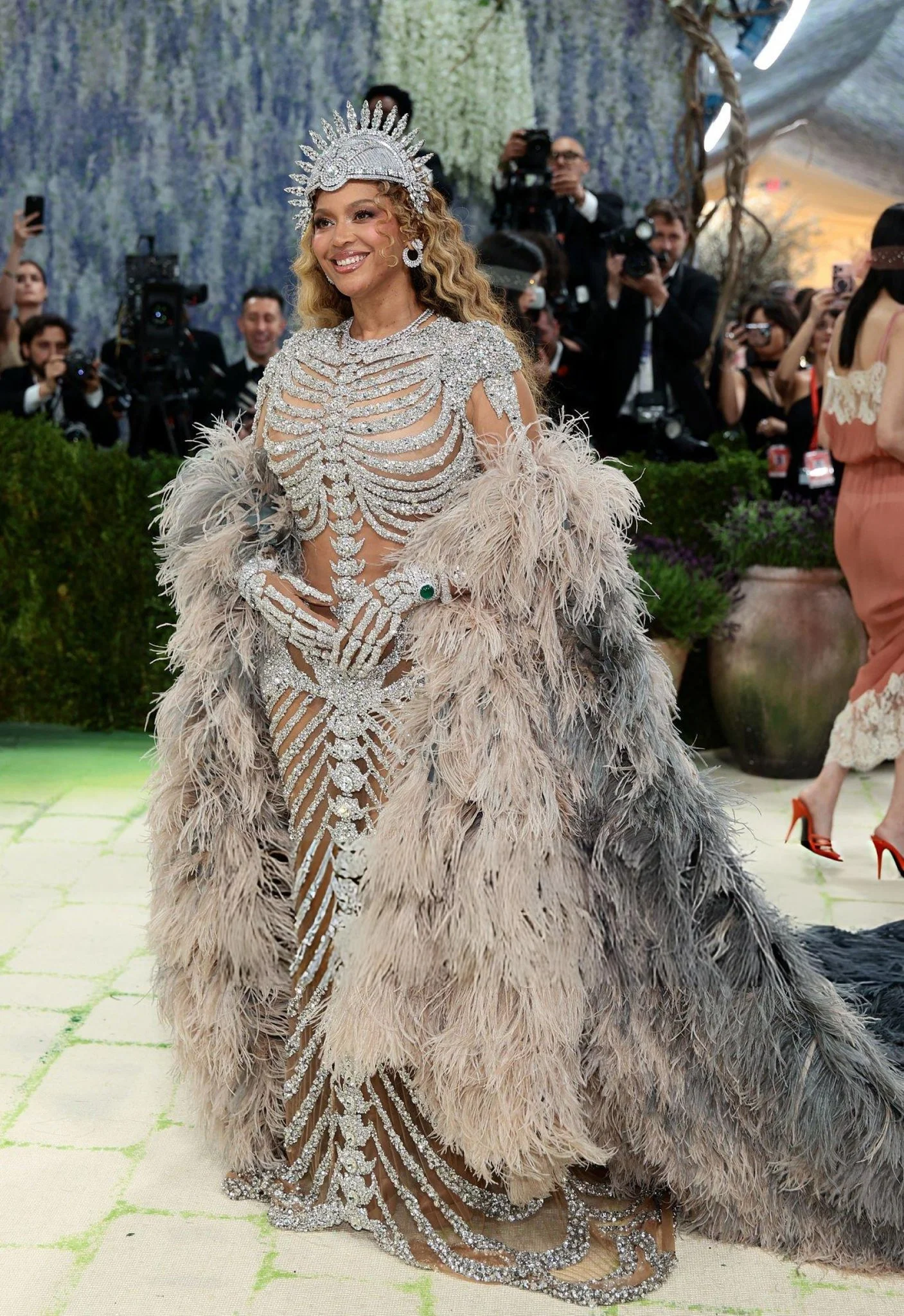
Béyonce wearing Custom Olivier Rousteing
Béyonce
Designer/Look: Custom Olivier Rousteing see-through bejeweled skeletal couture gown, referenced alongside Caroline Durieux’s Visitor (1944).
Why it worked: Beyoncé’s look turned the body into the artwork. The skeletal beading, transparency, and historical reference made the gown feel both glamorous and ghostly — a clear interpretation of Costume Art that went beyond beauty and into visual storytelling.
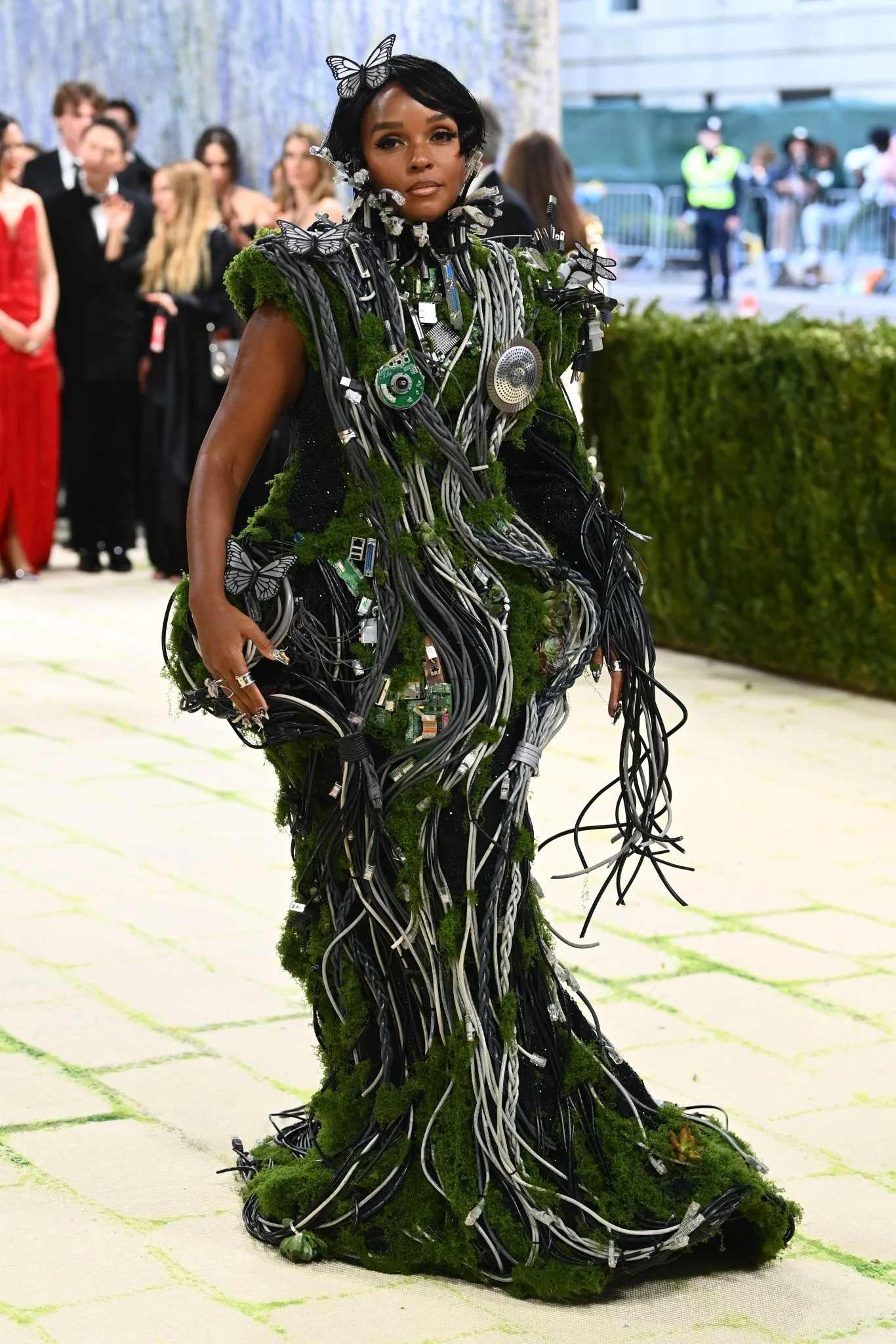
Janelle Monáe wearing Custom Christian Siriano
Janelle Monáe
Designer/Look: Custom Christian Siriano gown with Rainbow K jewelry, featuring moss, multicolored wires, butterflies, crystals, succulents, and a computer motherboard.
Why it worked: Janelle always kills it at the Met because she is never afraid to fully commit to the theme. Her look treated the body like a living installation — part garden, part machine, part couture sculpture. The mix of organic and technological materials made it one of the clearest “Fashion Is Art” interpretations: strange, theatrical, and fully committed without feeling like a safe red carpet gown.
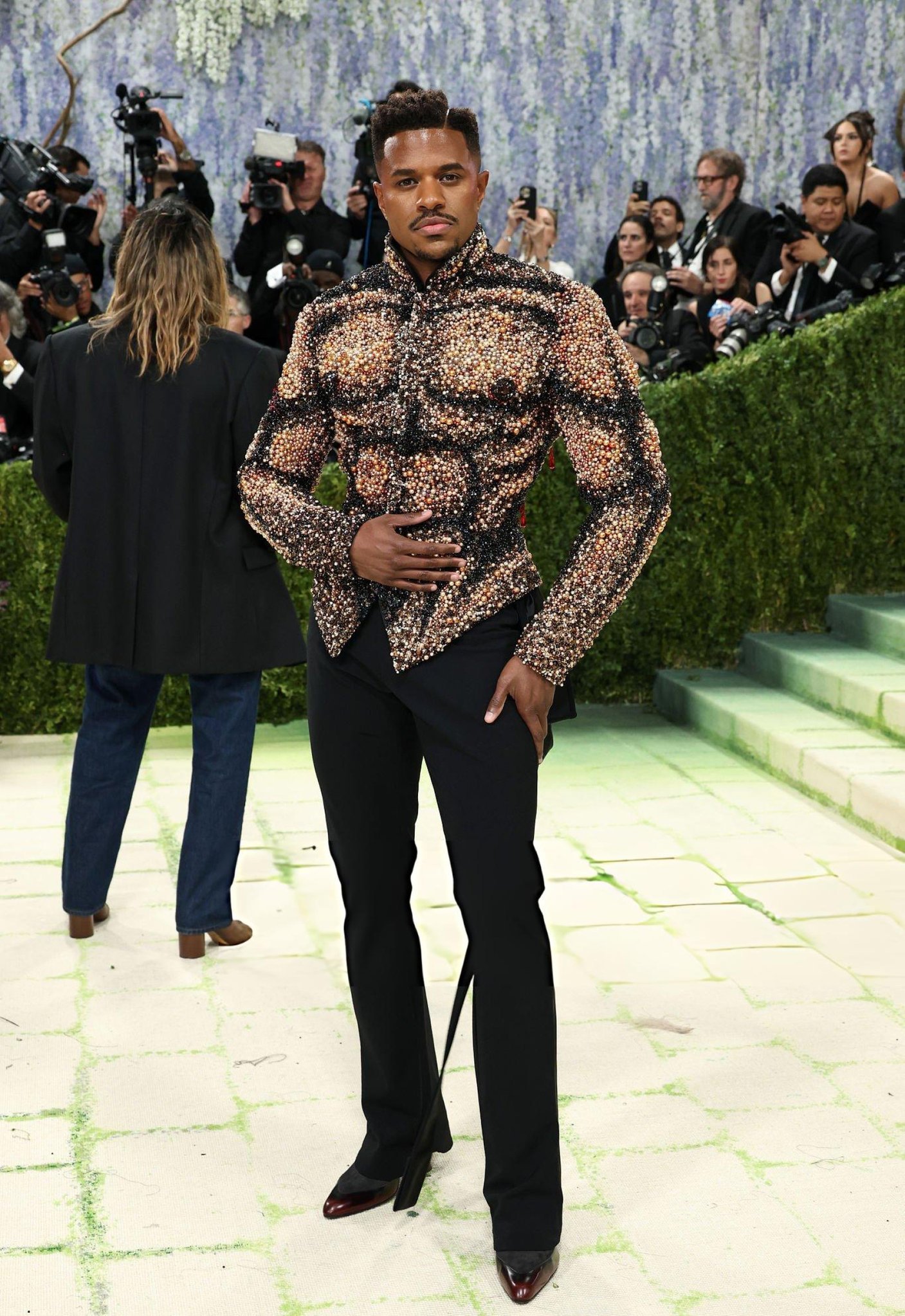
Jeremy Pope wearing Archival Vivienne Westwood
Jeremy Pope
Designer/Look: Archival Vivienne Westwood “Slave to Love” pearl-beaded evening jacket from Fall 1996, styled with Law Roach.
Why it worked: The look turned the male torso into sculpture through pearls, illusion, and body-conscious construction. Its connection to Westwood’s “Martyr to Love” made it feel like a direct conversation with the exhibit itself — archival, intimate, and fully aligned with the body-as-art language of the night.
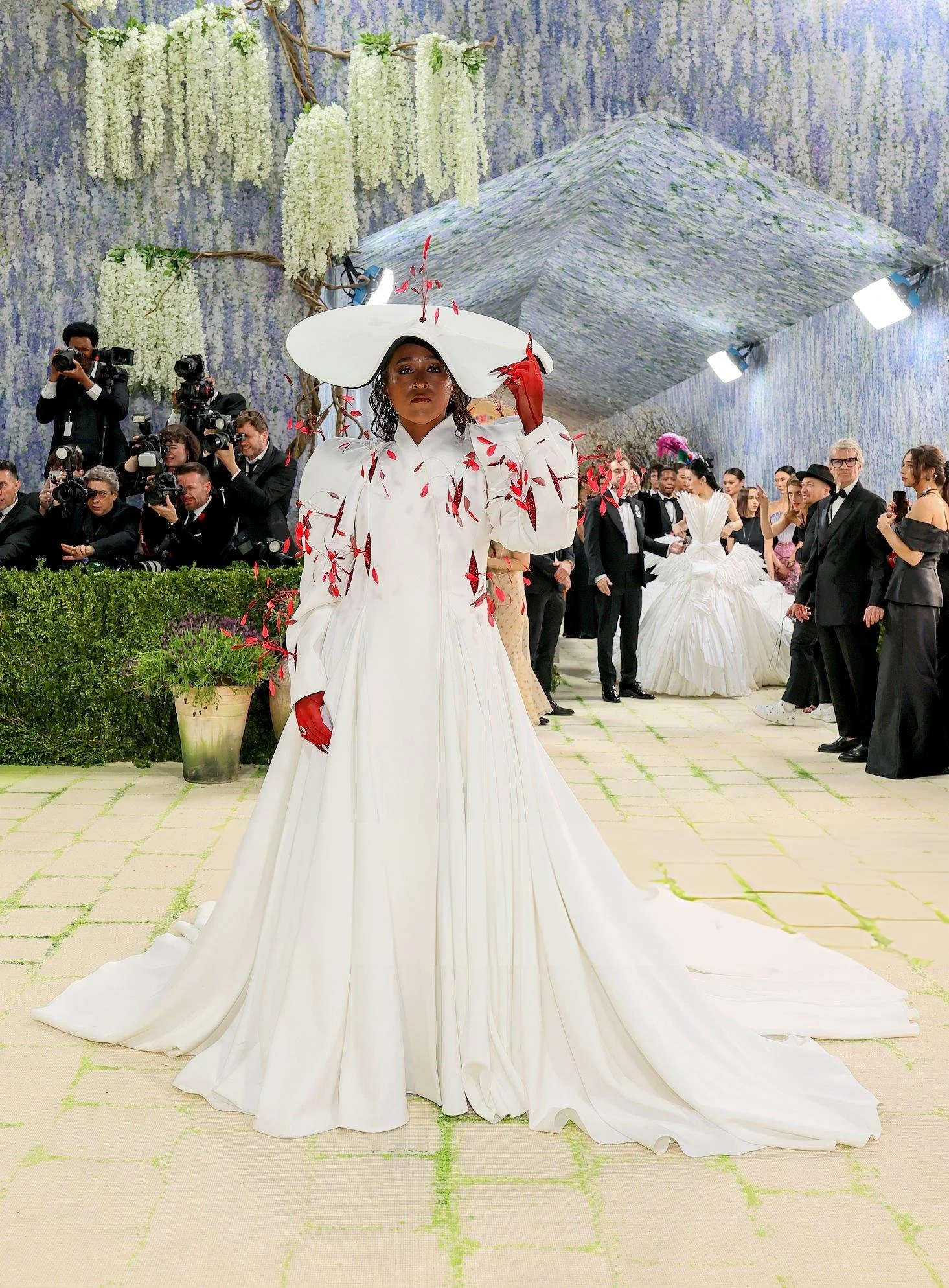
Naomi Osaka wearing Custom Robert Wun
Naomi Osaka
Designer/Look: Custom Robert Wun SS23 couture look, reimagined for the Met Gala, featuring an outer coat dress with scarlet feather “wounds” and a filament-red beaded inner dress, completed with 659,000 stitches.
Why it worked: Naomi’s look was one of the clearest body-as-art moments of the carpet. The outer layer being removed to reveal the red beaded dress made the look feel like a transformation — skin giving way to muscle, blood flow, and bodily interior. It was daring and completely visceral.
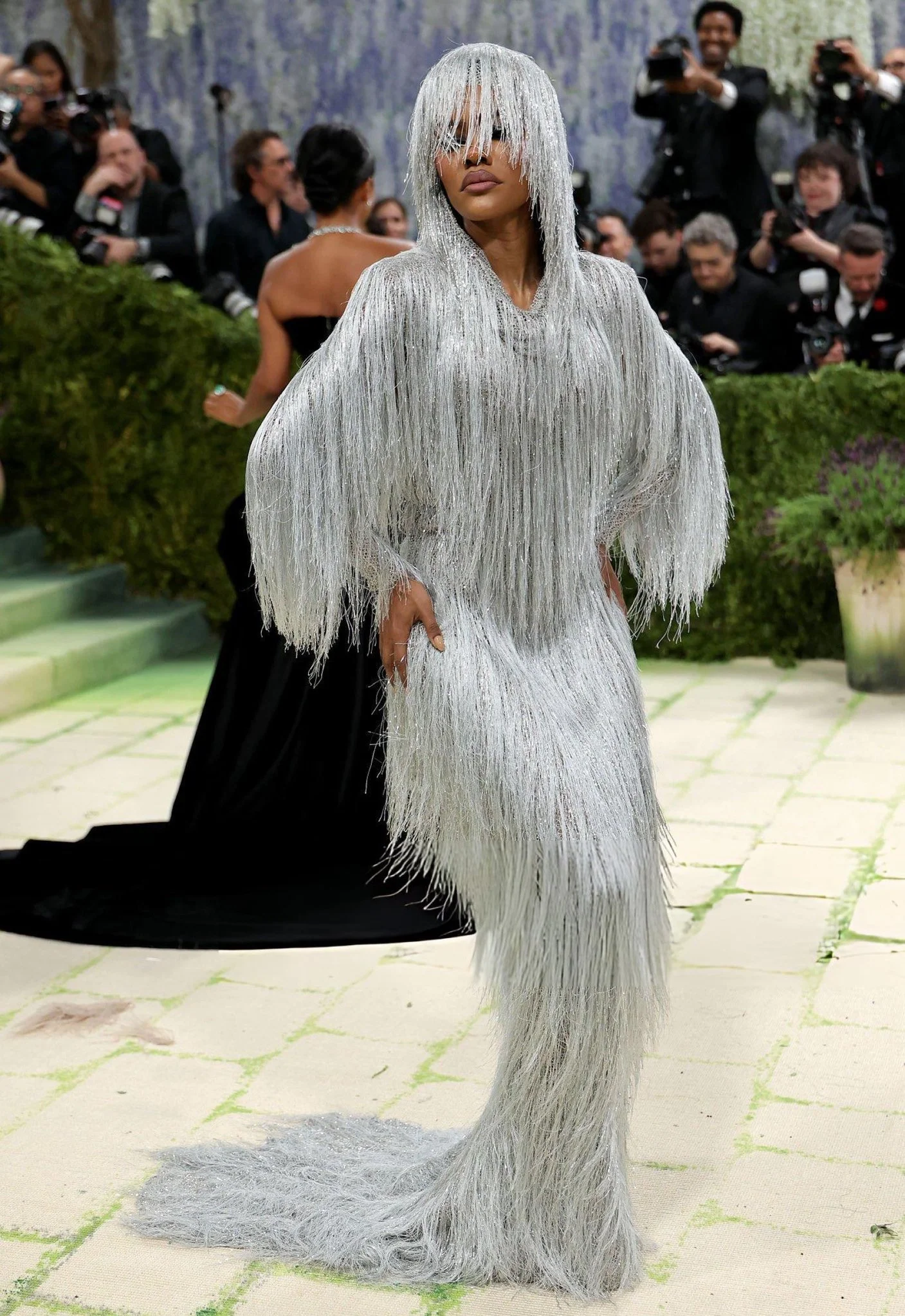
Teyana Taylor wearing Tom Ford
Teyana Taylor
Designer/Look: Silver fringed Tom Ford gown with a matching fringed headdress draped over half her face.
Why it worked: Teyana’s look understood movement as part of the artwork. The silver fringe created that “melting” effect she described, making the body appear and disappear as she moved — a ghostly, sculptural interpretation of Costume Art that still felt completely glamorous.
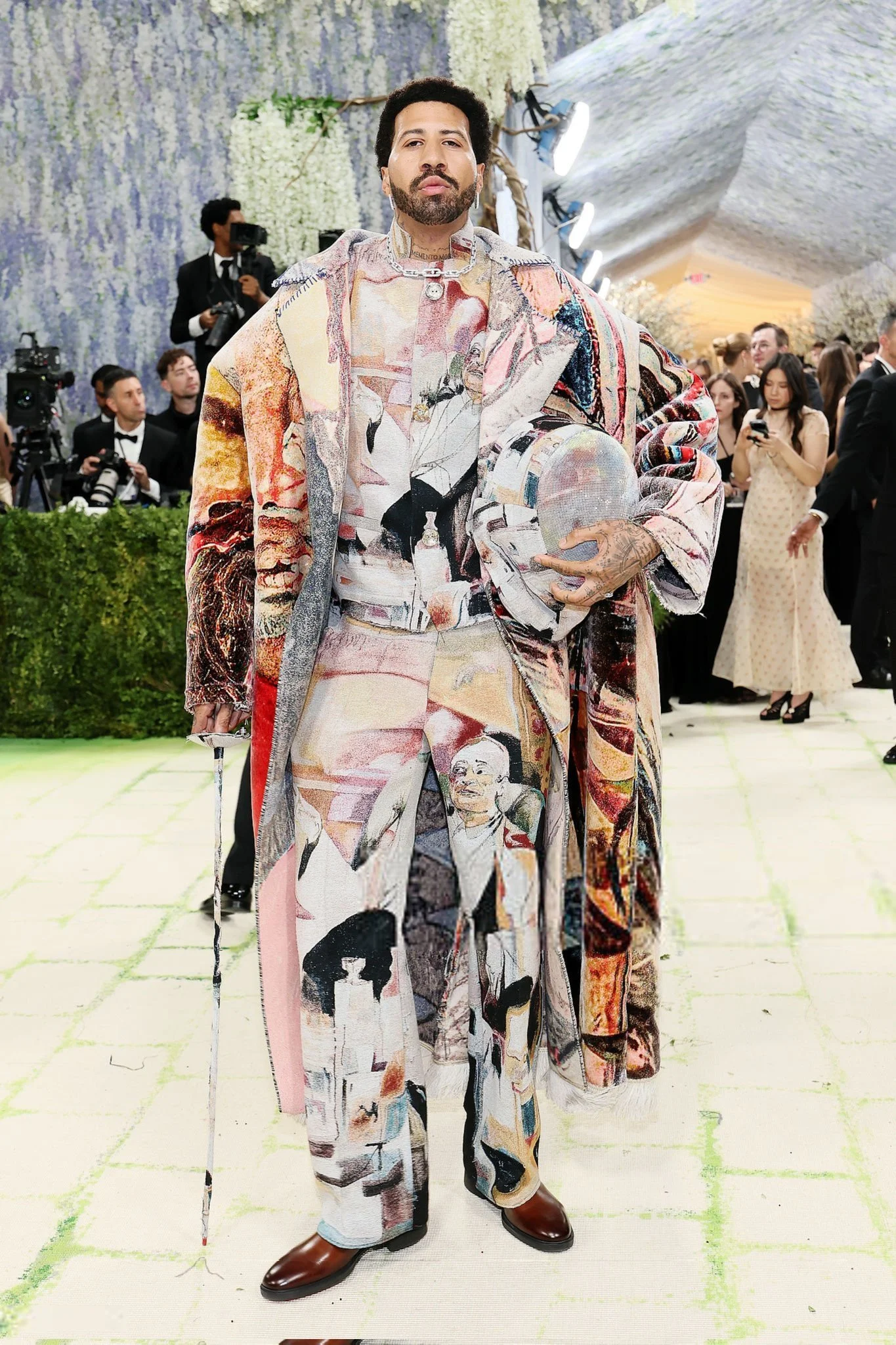
Miles Chamley-Watson wearing KidSuper
Miles Chamley-Watson
Designer/Look: KidSuper by Colm Dillane, styled with fencing gear including his foil and mask.
Why it worked: Miles’ look stood out because it brought his actual discipline into the language of the carpet. The fencing mask, foil, sharp tailoring, and painterly construction made him feel less like he was “wearing a theme” and more like he had stepped in as both athlete and art object. It gave performance, personal history, and silhouette — turning sport into costume, costume into character, and character into fashion.
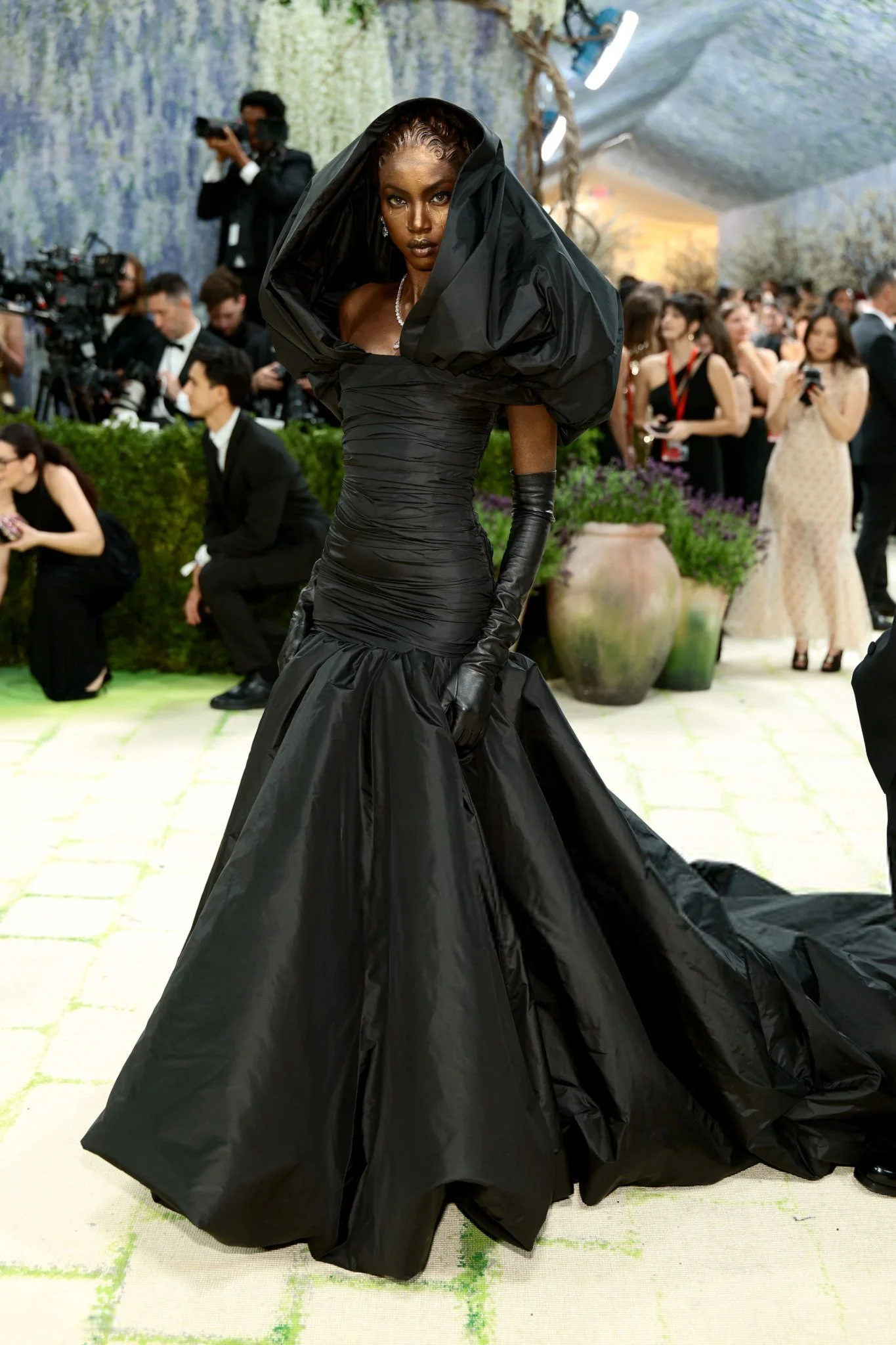
Anok Yai wearing Custom Balenciaga
Anok Yai
Designer/Look: Custom Balenciaga by Pierpaolo Piccioli, inspired by the Black Madonna.
Why it worked: Anok’s look had instant visual power and was one of the clearest interpretations of “Fashion Is Art” on the carpet. The sculpted prosthetic hair, statue-like silhouette, and tear details transformed her into a living religious-art reference. It felt sacred and dramatic in the most controlled way.
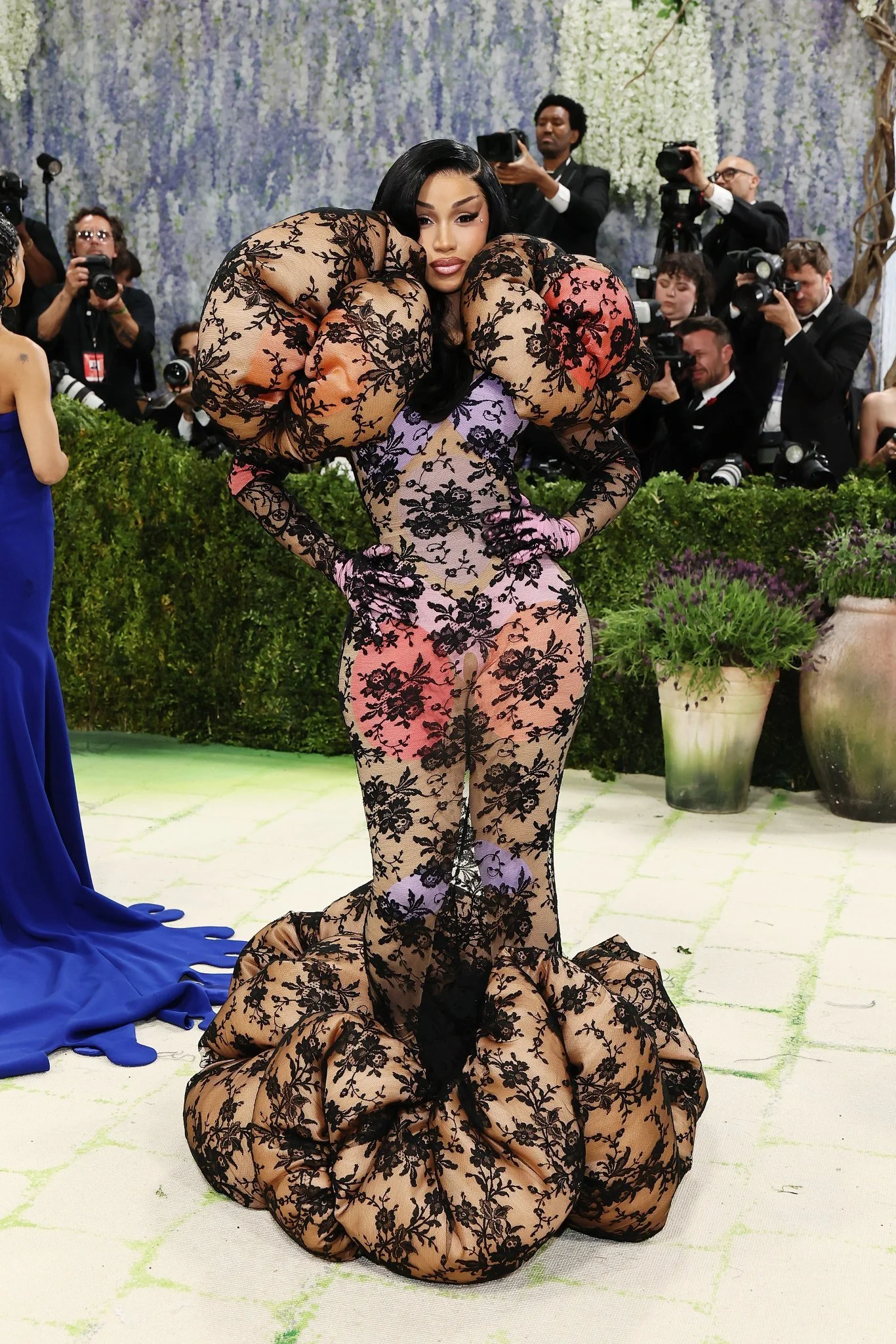
Cardi B wearing Custom Marc Jacobs
Cardi B
Designer/Look: Custom Marc Jacobs lace ruffled gown layered over a color-blocked bodysuit, paired with pink knee-high platform boots inspired by the label’s Kiki line.
Why it worked: Cardi’s look was weird, exaggerated, and impossible to ignore — which is exactly why it worked. The padded proportions, sheer black lace, color peeking through the body, and sky-high boots made the silhouette feel distorted in a way that connected back to Hans Bellmer’s doll-like body references. It was polarizing, but still very Cardi: dramatic, unserious in the best way, and fully committed to the body-as-art conversation
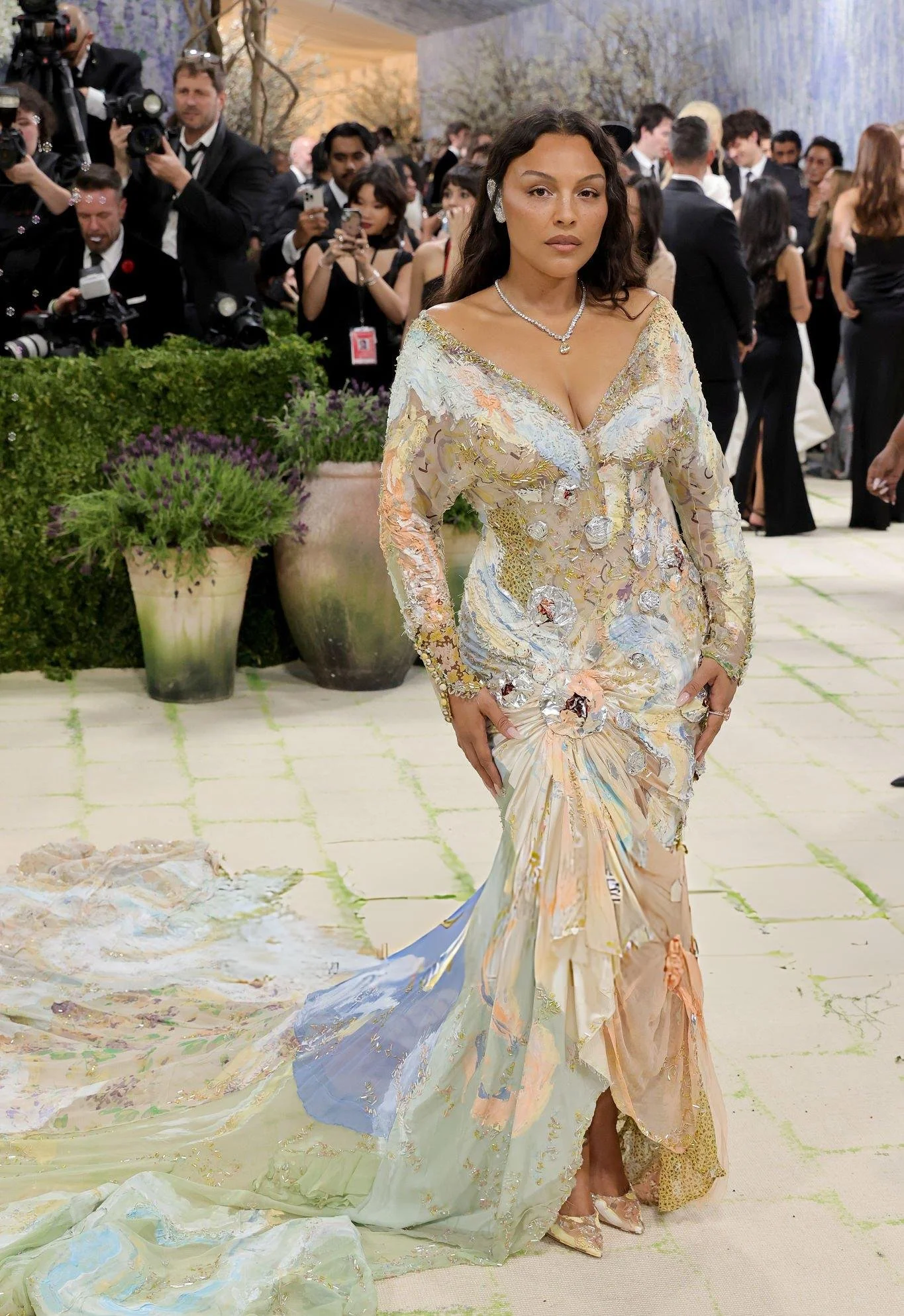
Paloma Elsesser wearing Bureau of Imagination
Paloma Elsesser
Designer/Look: Bureau of Imagination by Francesco Risso, with custom jewelry by Bernard James, upcycled and sourced from eBay.
Why it worked: Paloma’s look understood Costume Art through process and detail. Built from over 30 vintage dresses sourced on eBay from the 1920s, ’30s, and ’40s, then reworked into something hand-painted, embellished, and completely new, the gown felt like fashion history collaged back onto the body. The crystal-covered ear made the beauty feel like part of the artwork too, turning the whole look into one soft, very well thought out image.
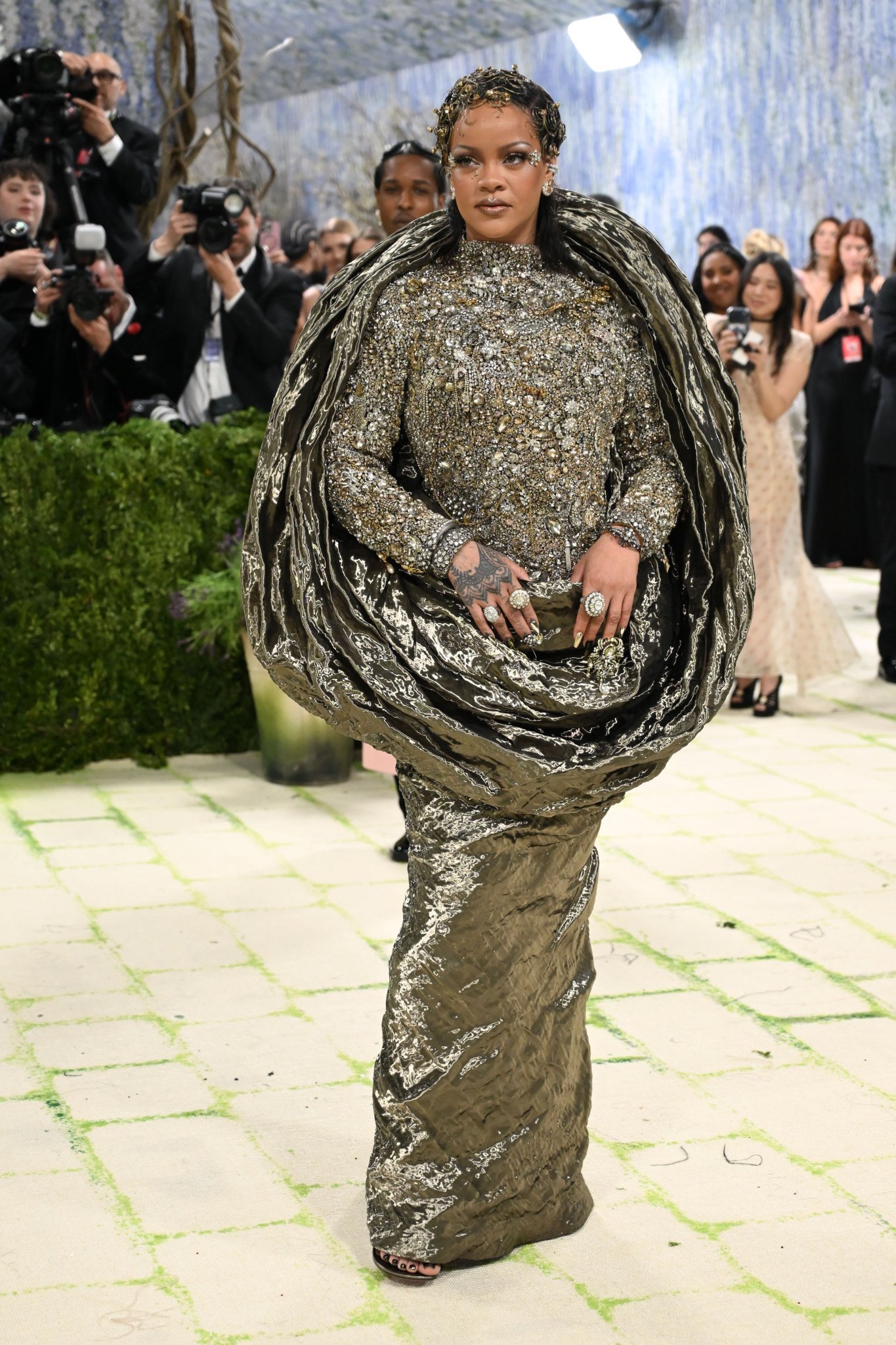
Rihanna wearing Custom Maison Margiela
Rihanna
Designer/Look: Custom sculptural Maison Margiela by Glenn Martens, styled by Jahleel Weaver, with an Art Deco–style headpiece.
Why it worked: Rihanna’s looks at the Met are always works of art, but the construction of this one is what made it land. The draped column silhouette pulled from medieval Flemish architecture, while the hand-sculpted duchess silk, recycled metal threads, crystal beading, antique jewels, and chains made the gown feel like a relic pulled from a cathedral. In her words it’s giving, “Oyster”.
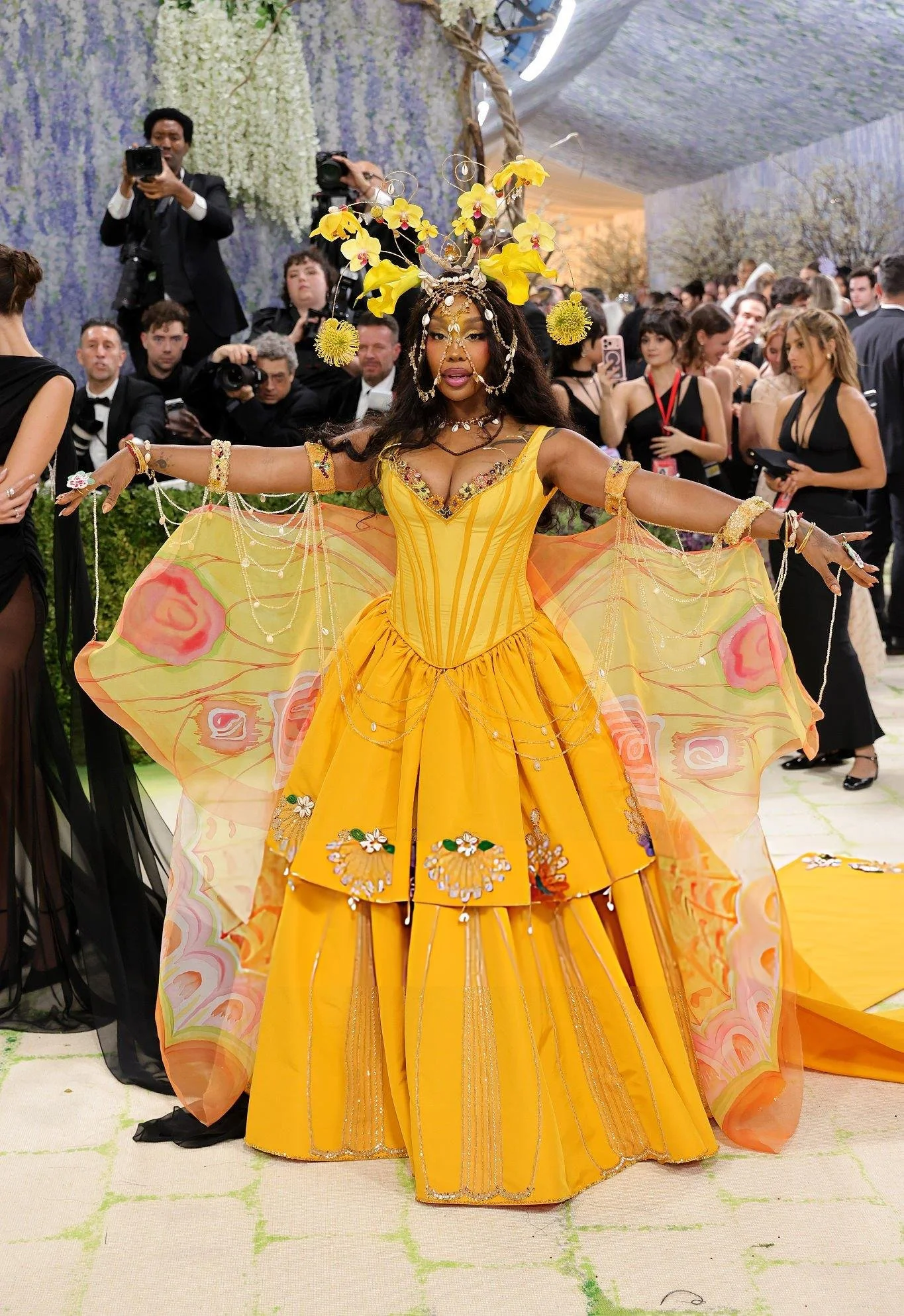
sza wearing custom bode
SZA
Designer/Look: Custom Bode by Emily Adams Bode Aujla: a golden yellow corset dress with a tiered embroidered skirt, sheer butterfly-inspired cape, floral headpiece, cowrie shells, and champagne-colored jewels.
Why it worked: SZA’s look felt like a garden deity without losing the fashion. The yellow fabrics, embroidered skirt, butterfly cape, and detailed jeweling all worked together to create something soft but still theatrical. It was whimsical, personal and costume art. less red carpet gown, more wearable folklore.
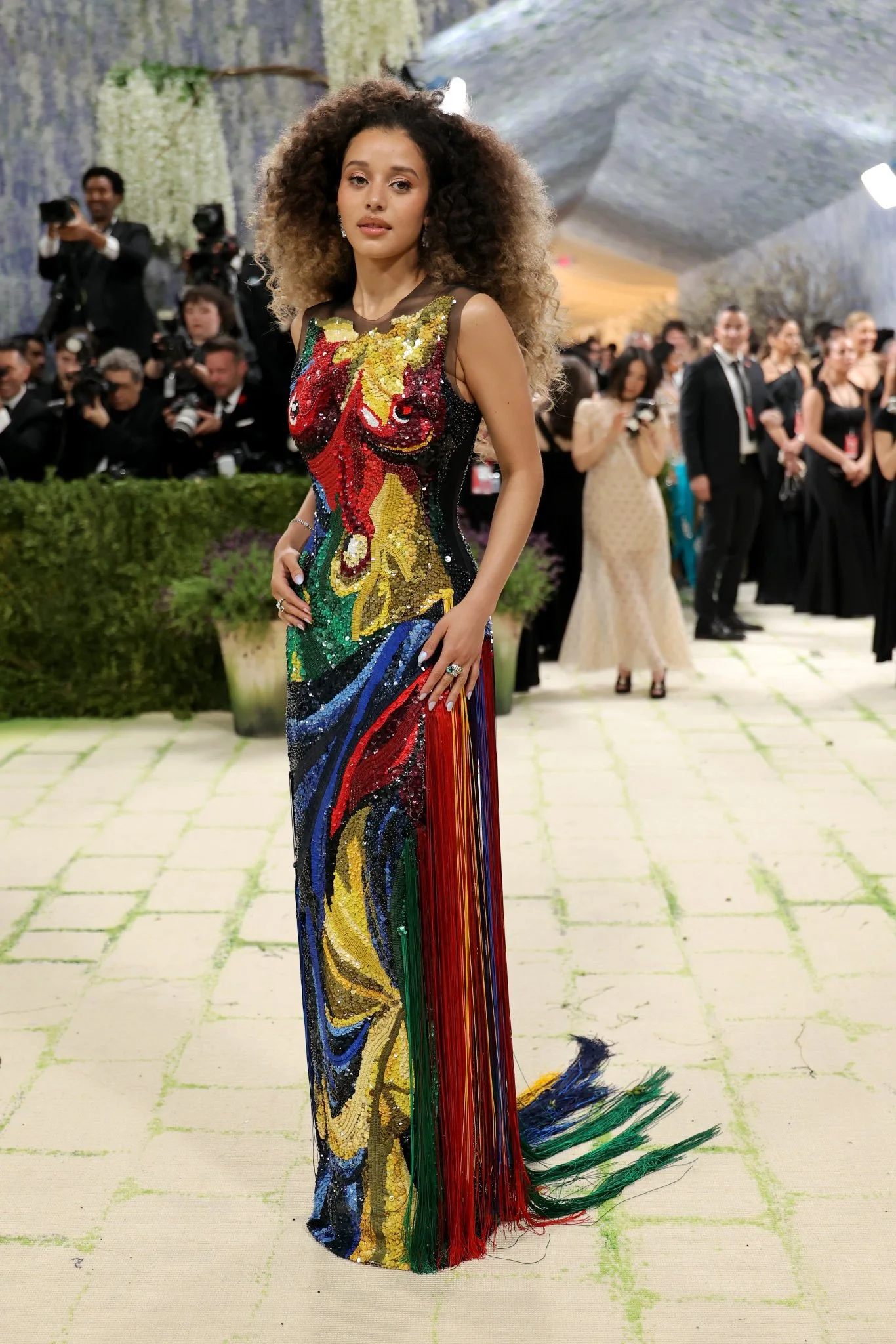
Chase Infiniti wearing Thom Browne
Chase Infiniti
Designer/Look: Thom Browne trompe l’oeil dress inspired by the Venus de Milo, embroidered with over 1.5 million stacked sequins and tiered silk fringe in over 600 colors to mimic brushstrokes.
Why it worked: For a Met debut, this was a clear point of view. Chase’s look understood the theme perfectly. The body became the canvas, the silhouette carried the sculpture reference, and the color kept it from feeling too literal or stiff. It was polished, memorable, and one of the stronger “Fashion Is Art” interpretations of the night.
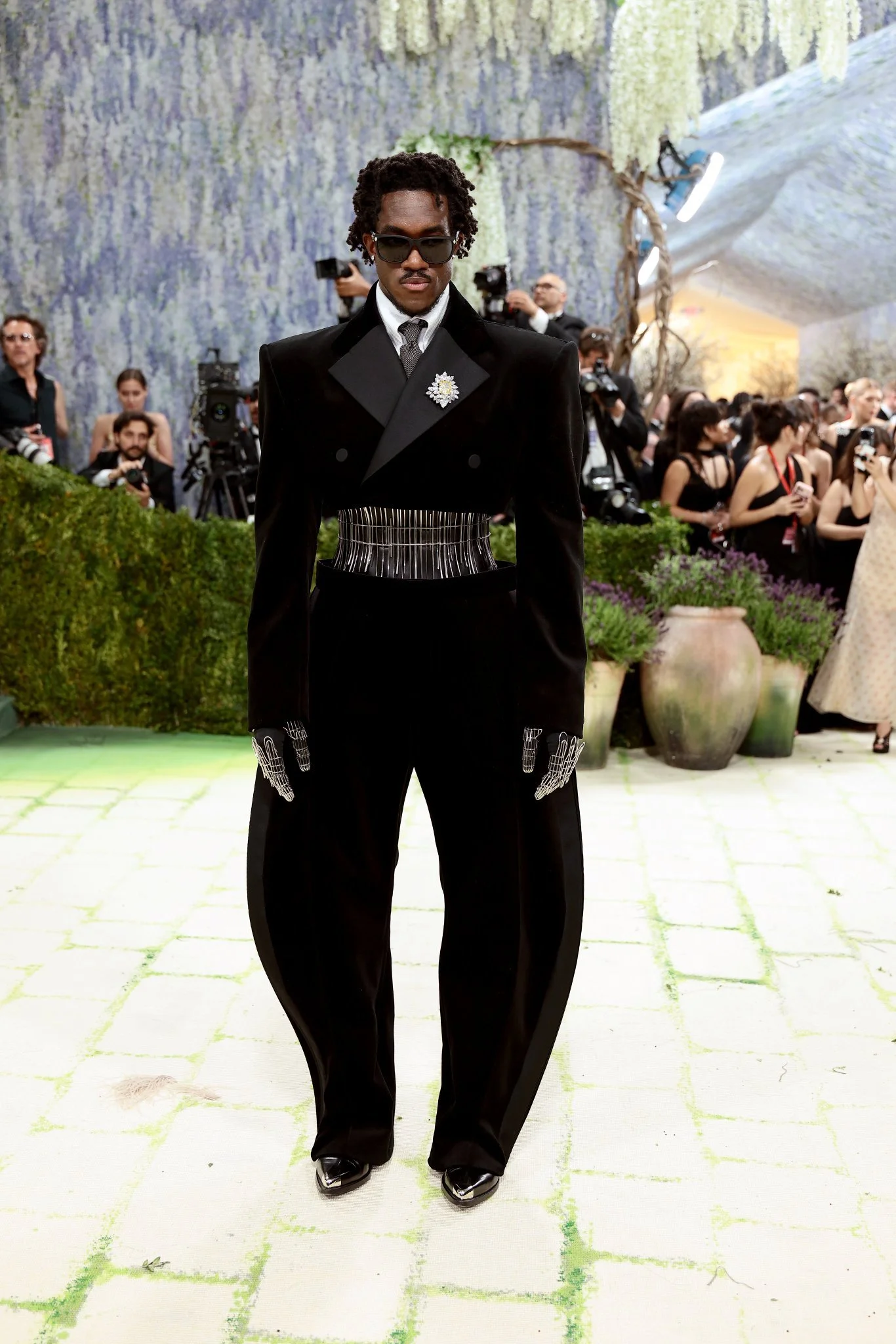
Wisdom Kaye in Custom Public School
Wisdom Kaye
Designer/Look: Custom Public School by Dao-Yi Chow and Maxwell Osborne, reconstructed from recycled fabrics with a high-collar jacquard shirt and satin silk tie.
Why it worked: Wisdom’s look worked because it treated tailoring like texture and sculpture, not just menswear. The sharp black suit, layered construction, high collar, and heavy fabric choice gave the look a controlled intensity that felt very true to his style. It was clean, dramatic, and honestly, proof that a tailored look can still carry the theme when the details are intentional.
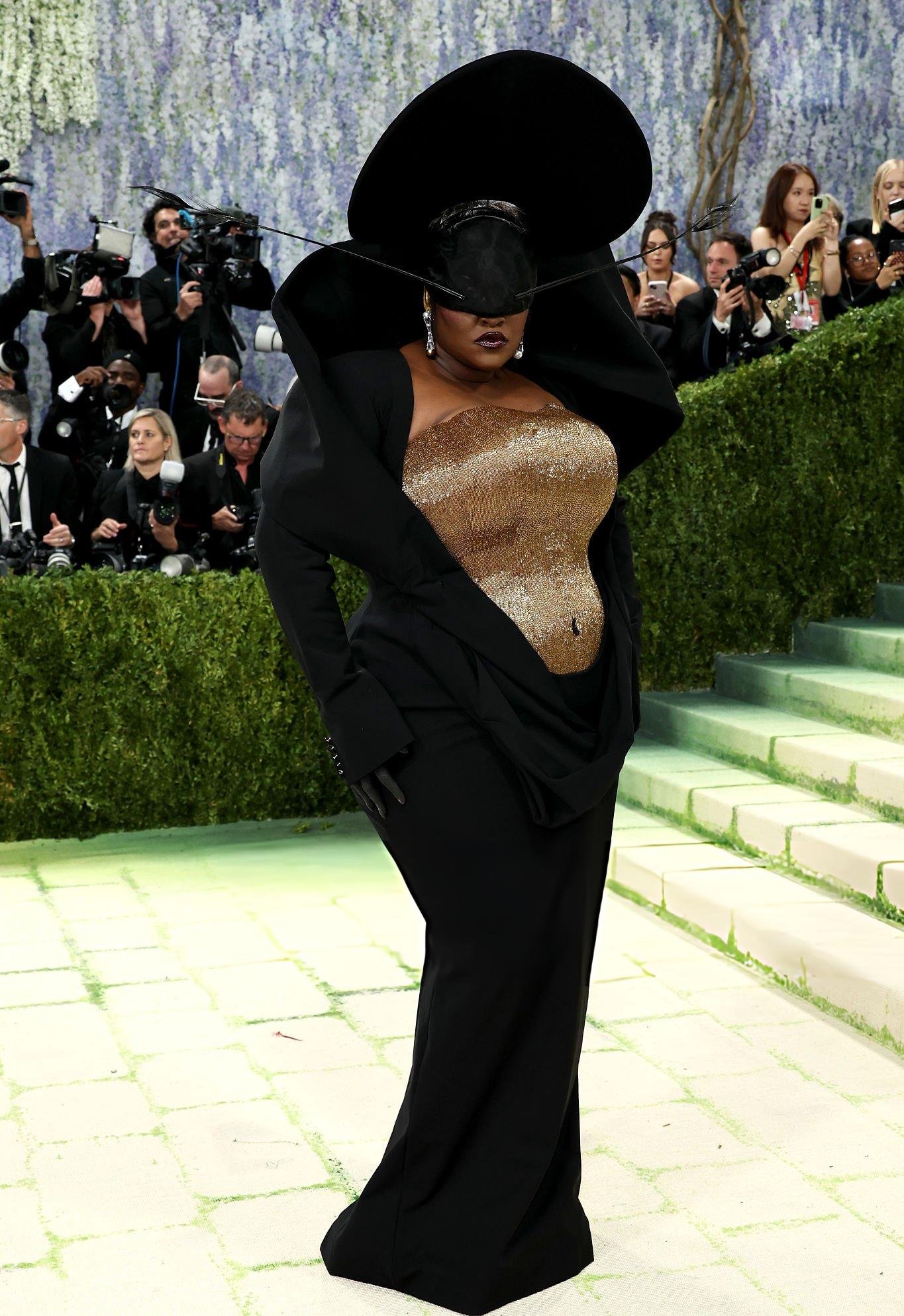
Yseult wearing custom Harris Reed
Yseult
Designer/Look: Custom Harris Reed demi-couture look referencing the Venus of Willendorf, featuring over 400 hours of glass beadwork transformed into a sculpted bodice, belly button included.
Why it worked: Yseult’s look worked because the body was the whole point. The sculpted bodice gave the silhouette weight and history without making it feel too literal, and the beadwork turned the form into something closer to an artifact. It was gorgeous and sensual, one of those looks where the silhouette did most of the talking.
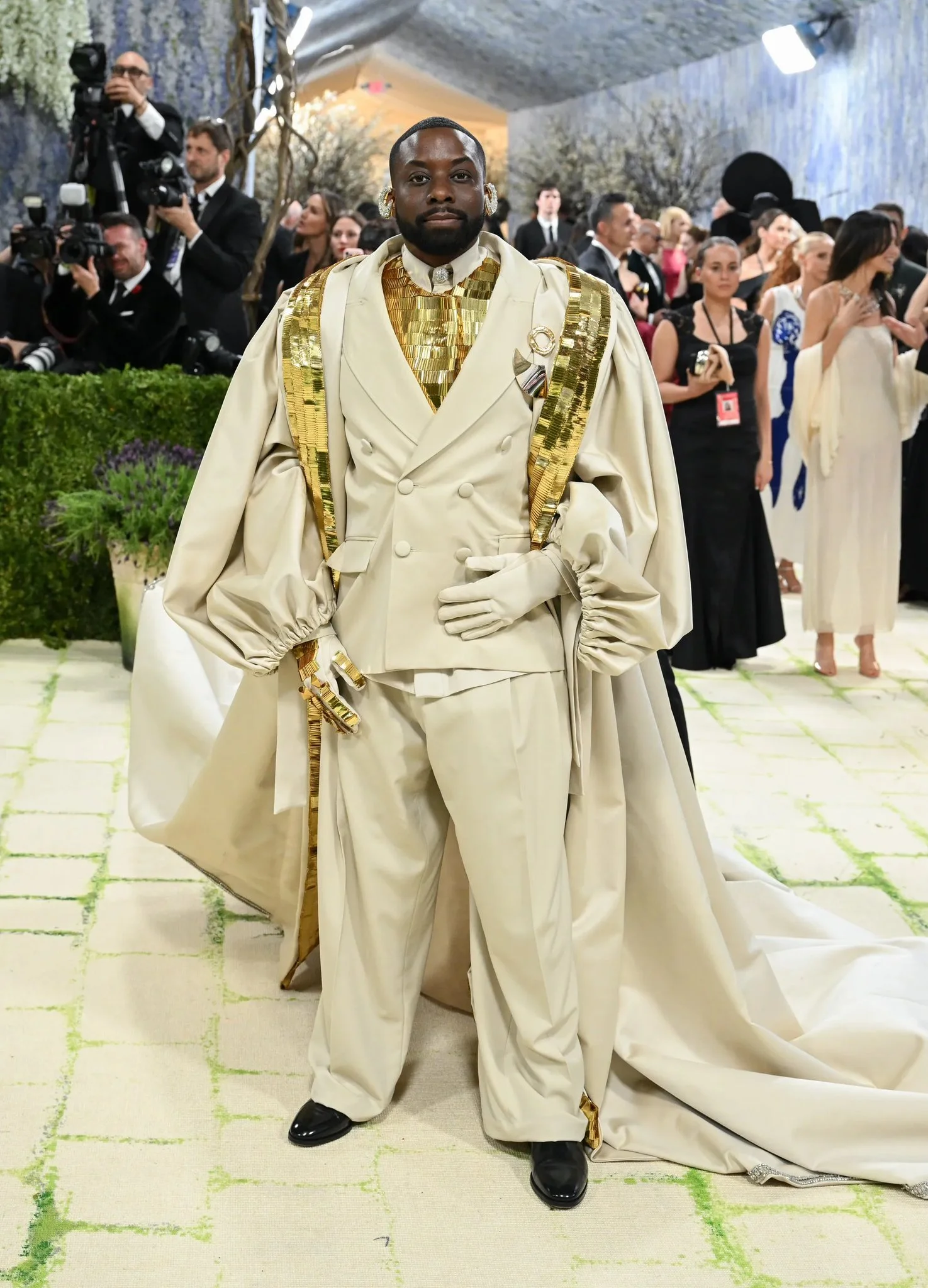
John Imah wearing custom Harbison Studio
John Imah
Designer/Look: Fully custom Harbison Studio look styled by Charles Elliott Harbison: Custom Constellation Tuxedo, Gilded Paix Gillet, Silk Pyjama Shirt, and Gilded Paix Capecoat in Vanilla Duchesse, finished with 24K Signature Brooch Hardware and a Gilded Robotic Glove.
Why it worked: John’s look worked because it pulled from both heritage and futurism without making either feel like a gimmick. The Nigerian influence and gilded detailing gave the look a clear point of view: elegance, technology, and cultural identity all existing in the same frame. It felt regal and sharp, exactly the kind of menswear that understands the theme.
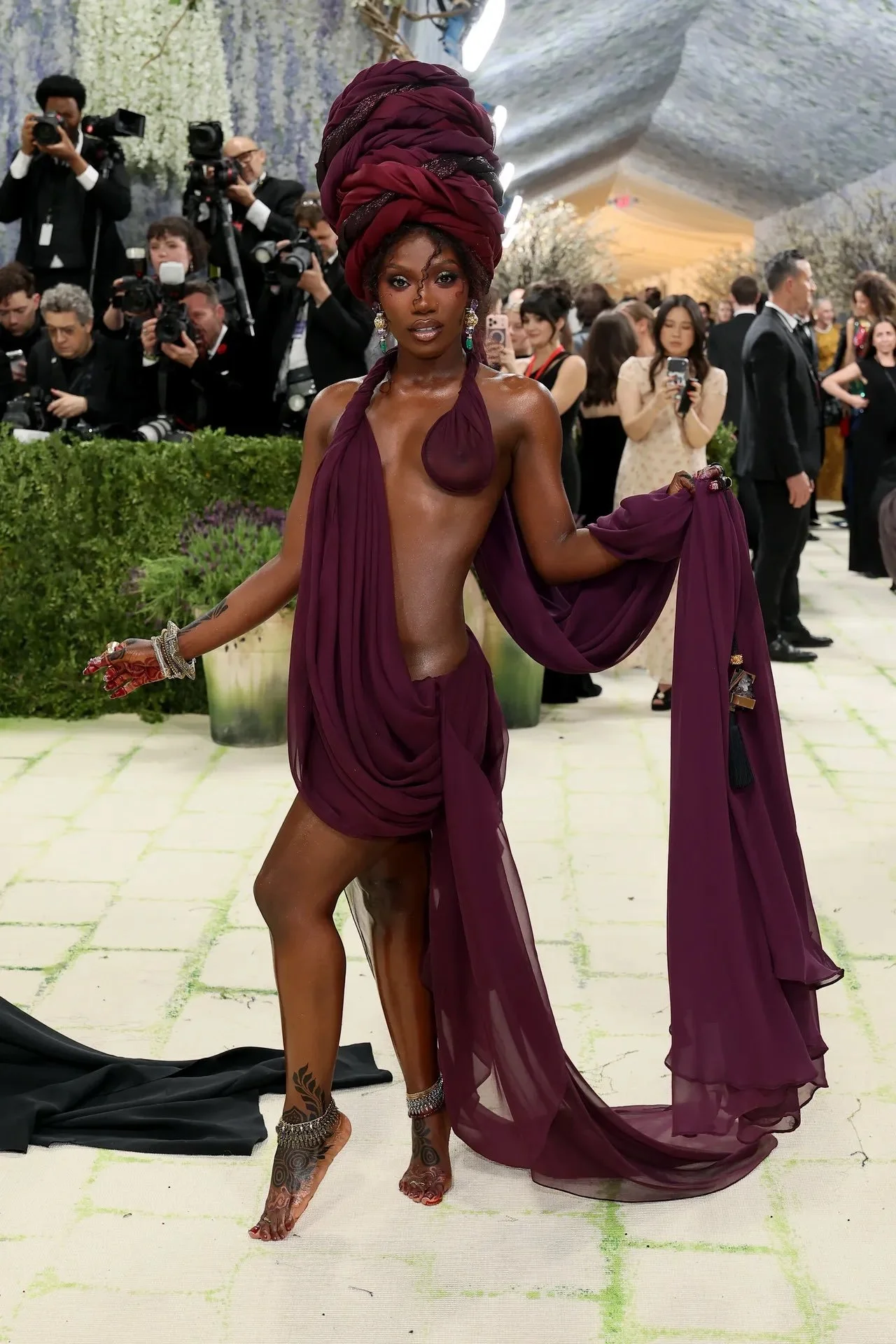
Doechii wearing Marc Jacobs
Doechii
Designer/Look: Burgundy Marc Jacobs wrap dress with a matching Marc Jacobs headpiece, styled by Sam Woolf, with dark feminine glam by Chelsea Uchenna and crystal-cluster nails by Rachel Sun.
Why it worked: Doechii’s look worked because everything was in the same world. The burgundy wrap, headpiece, smoky jewel-toned makeup, natural textured hair, edges, and crystal nails all built one dark, feminine image without the beauty feeling like an afterthought. It was moody, intentional, and styled down to the smallest detail.
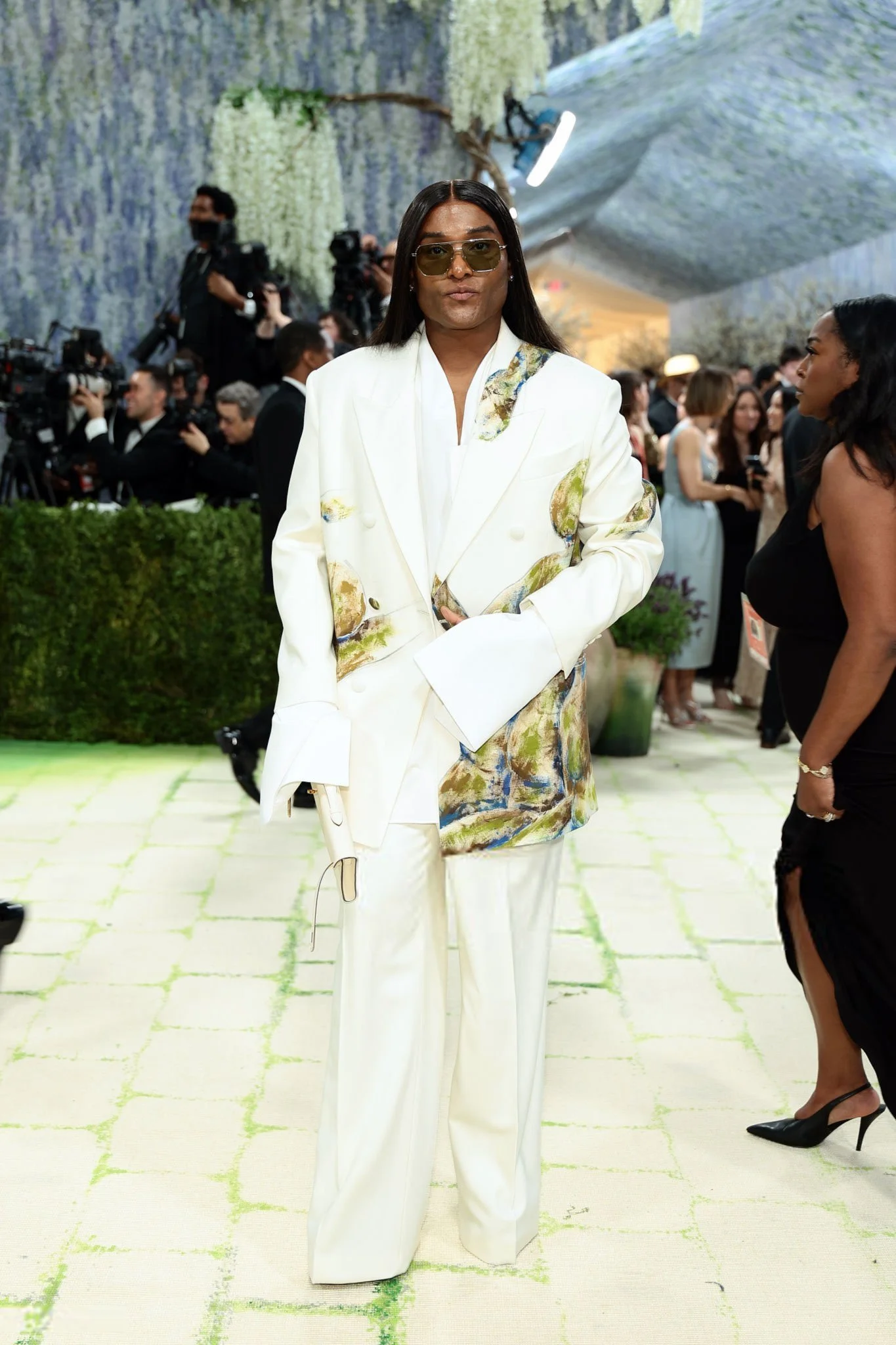
Law Roach wearing custom ami Paris
Law Roach
Designer/Look: Custom Ami Paris by Alexandre Mattiussi, a soft-structured white three-piece suit hand-painted by Gabonese artist Naïla Opiangah.
Why it worked: Law’s look made the “Fashion Is Art” dress code literal in the right way. The white suit became the canvas, and Naïla Opiangah’s hand-painted motif brought the body, Black identity, and image-making directly into the look. It felt personal to Law as the Image Architect— clean tailoring, but with an actual artwork living on it.
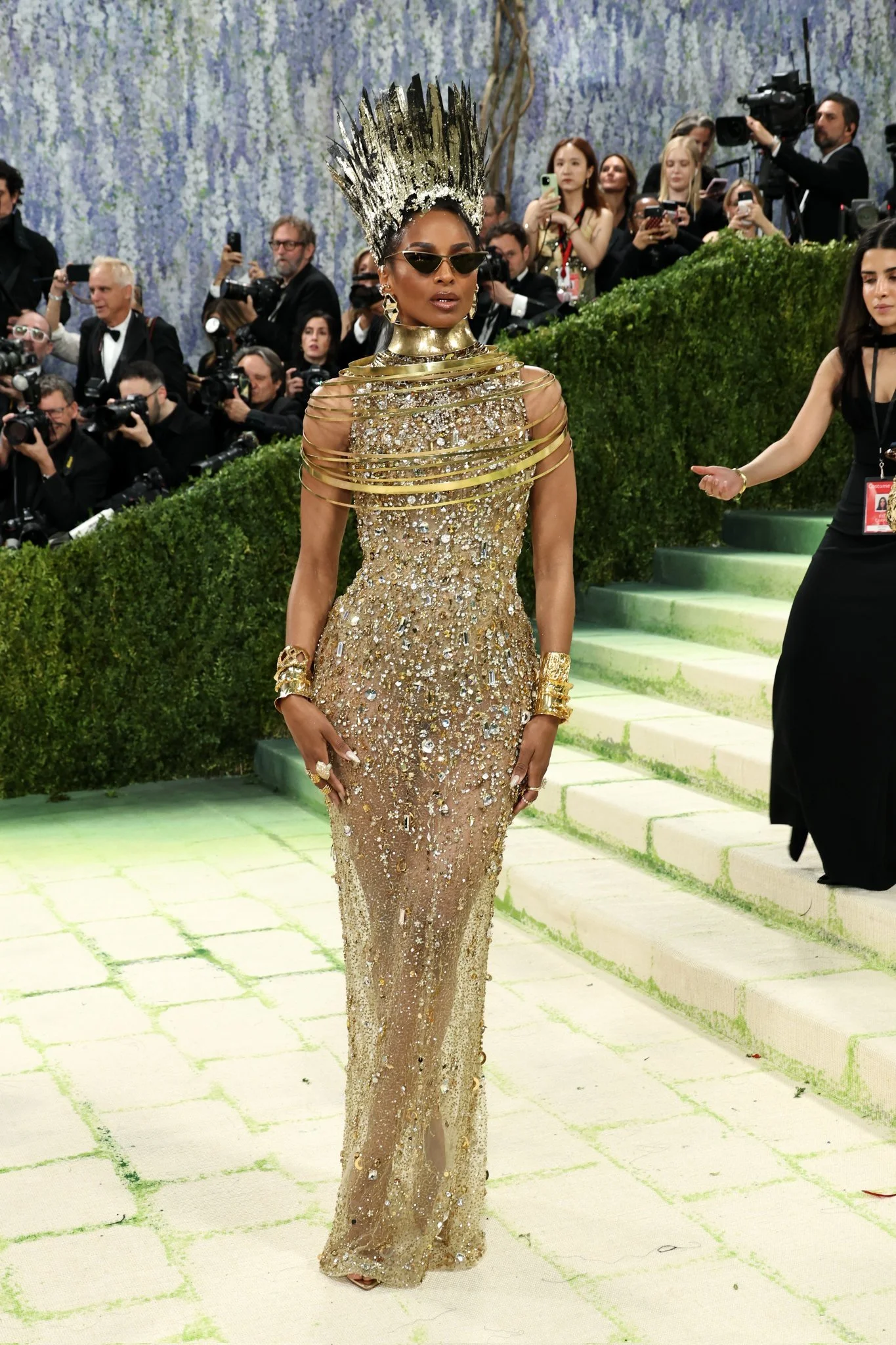
Ciara wearing Celia Kritharioti
Ciara
Designer/Look: Celia Kritharioti gold-embellished sheer gown inspired by Queen Nefertiti, styled by Marni Senofonte, with Lorraine Schwartz jewelry and a sculptural headpiece made from her own hair.
Why it worked: Ciara’s look worked because the Nefertiti reference was carried through every detail, not just the shape of the headpiece. The sheer gold gown, armor-like collar, sculptural jewelry, and hair crown made her feel powerful without flattening the reference into costume. It was polished, and rooted in a larger story of Black lineage and presence.
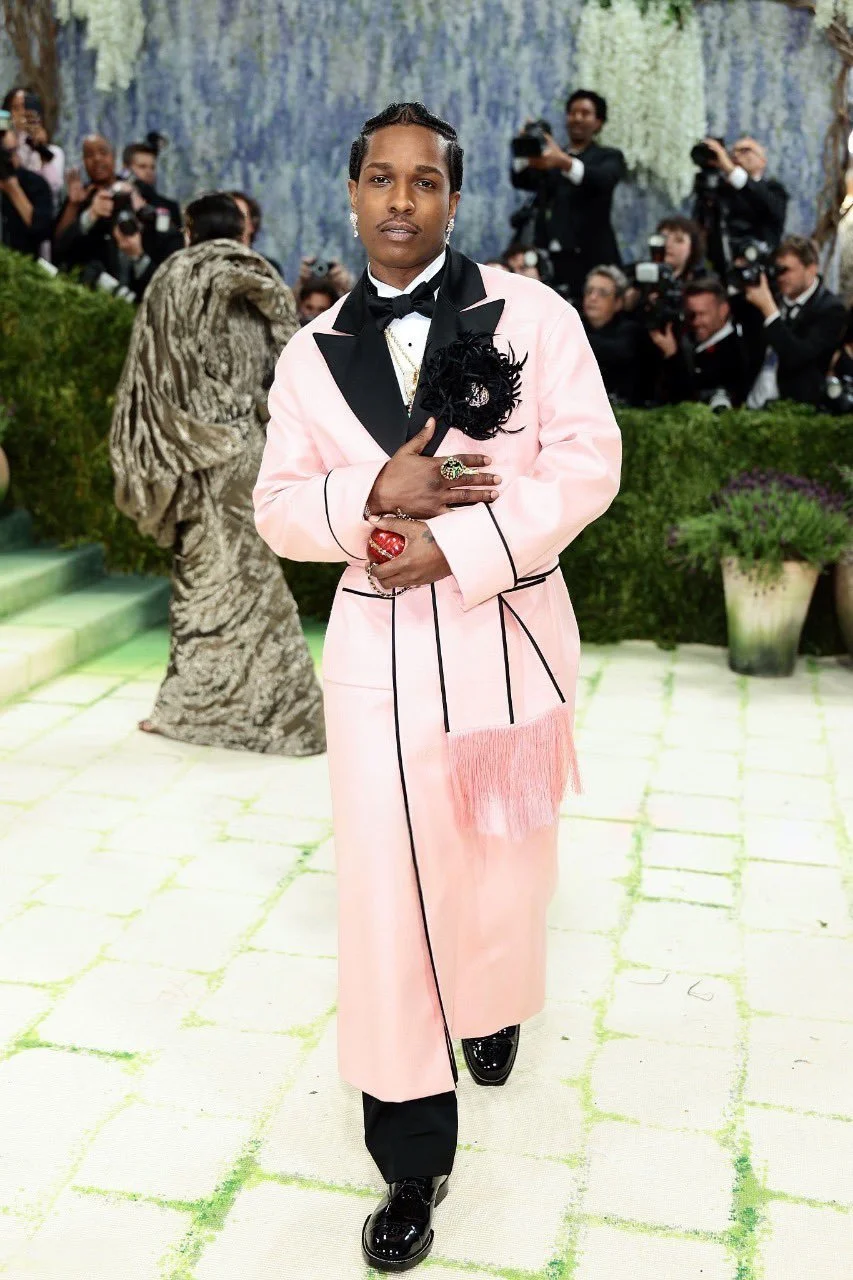
A$AP ROCKY wearing custom Chanel
A$AP Rocky
Designer/Look: Custom Chanel by Matthieu Blazy: a wool pink robe with black satin lapels, black piping, black trousers, a white cotton shirt, a black silk-and-feather camelia, and Chanel High Jewelry.
Why it worked: Rocky’s look worked because it brought softness into menswear without losing shape. The pink robe, satin lapels, feathered camelia, and jewelry gave the look ease and elegance, while the black trousers and piping kept it grounded. It felt relaxed, expensive, and intentional — not a basic tux trying to pass as theme.
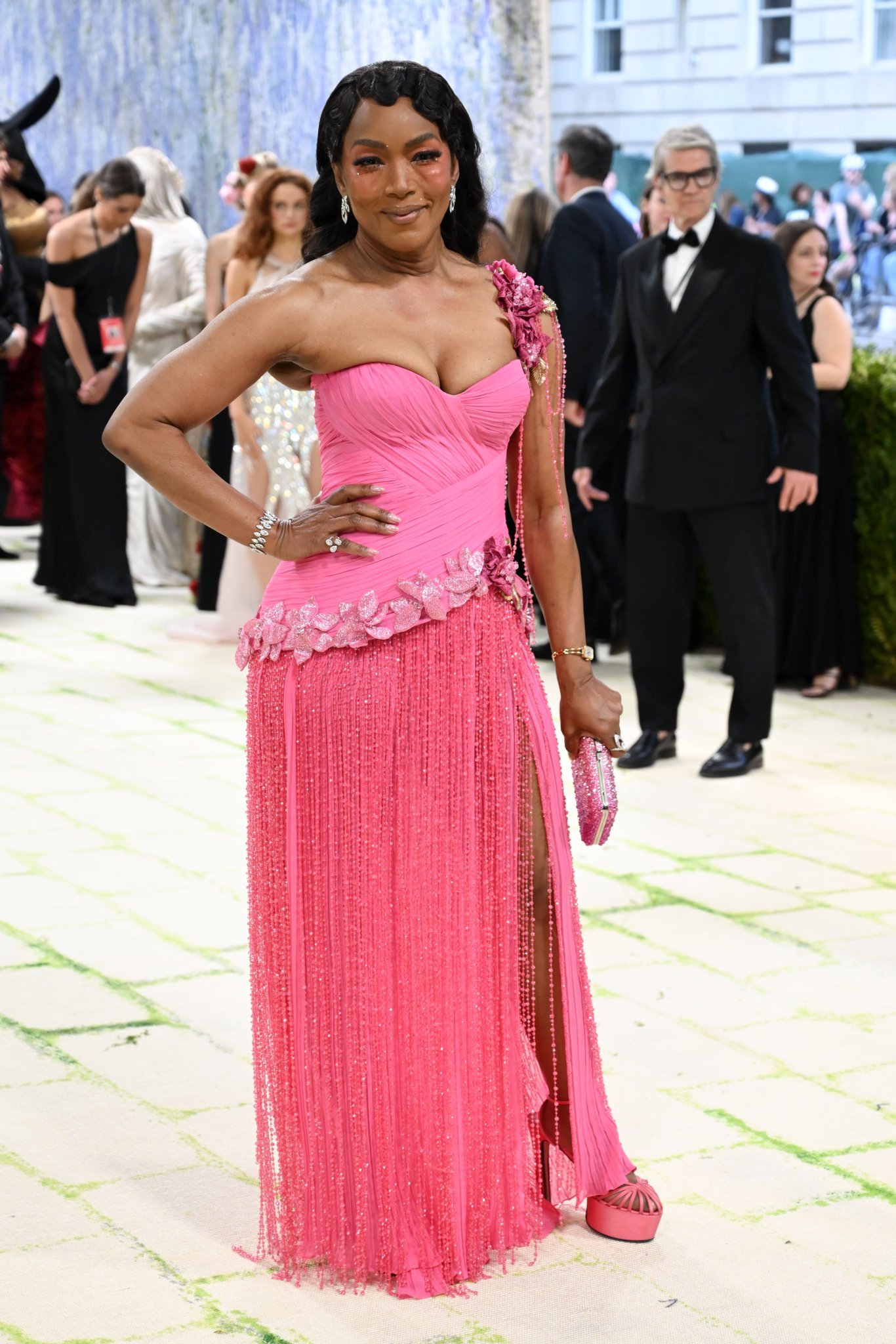
Angela Bassett wearing Prabal Gurung
Angela Bassett
Designer/Look: Prabal Gurung rose-pink floral gown inspired by Laura Wheeler Waring’s 1927 painting Girl in a Pink Dress, with Messika jewelry.
Why it worked: The reference was clear without turning the look into a replica. The pink, the florals, and the softness of the silhouette pulled from the painting, but the gown still felt modern and red carpet-ready. It was elegant, artful, and one of the prettiest direct painting-to-fashion moments of the night.
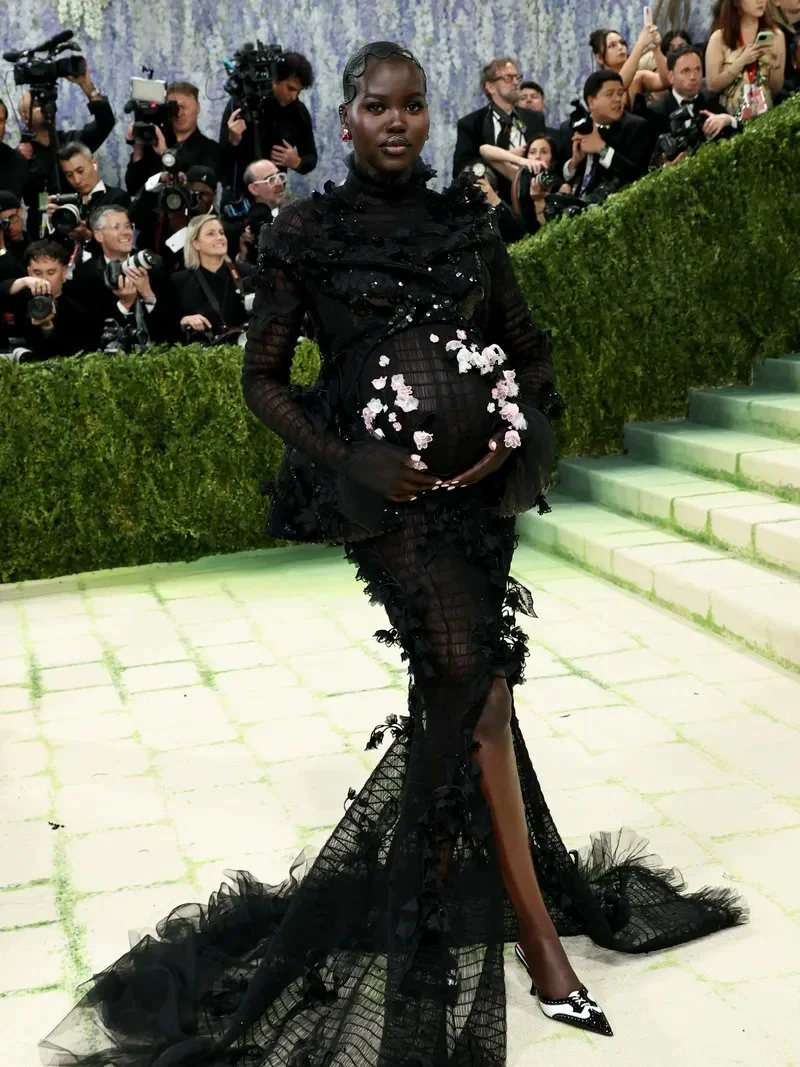
Adut Akech wearing custom Thom Browne
Adut Akech
Designer/Look: Custom Thom Browne maternity look featuring an organza bodysuit appliquéd with Lily of the Valley, the May birth flower, paired with a black silk taffeta overcoat.
Why it worked: Adut’s look brought maternity into the theme without making it feel like a side note. The sheer bodysuit framed her full-term pregnancy with softness and intention, while the black overcoat gave the whole look structure and contrast. The Lily of the Valley detail made it personal without being too on the nose — a sweet nod to the baby, but still completely fashion.
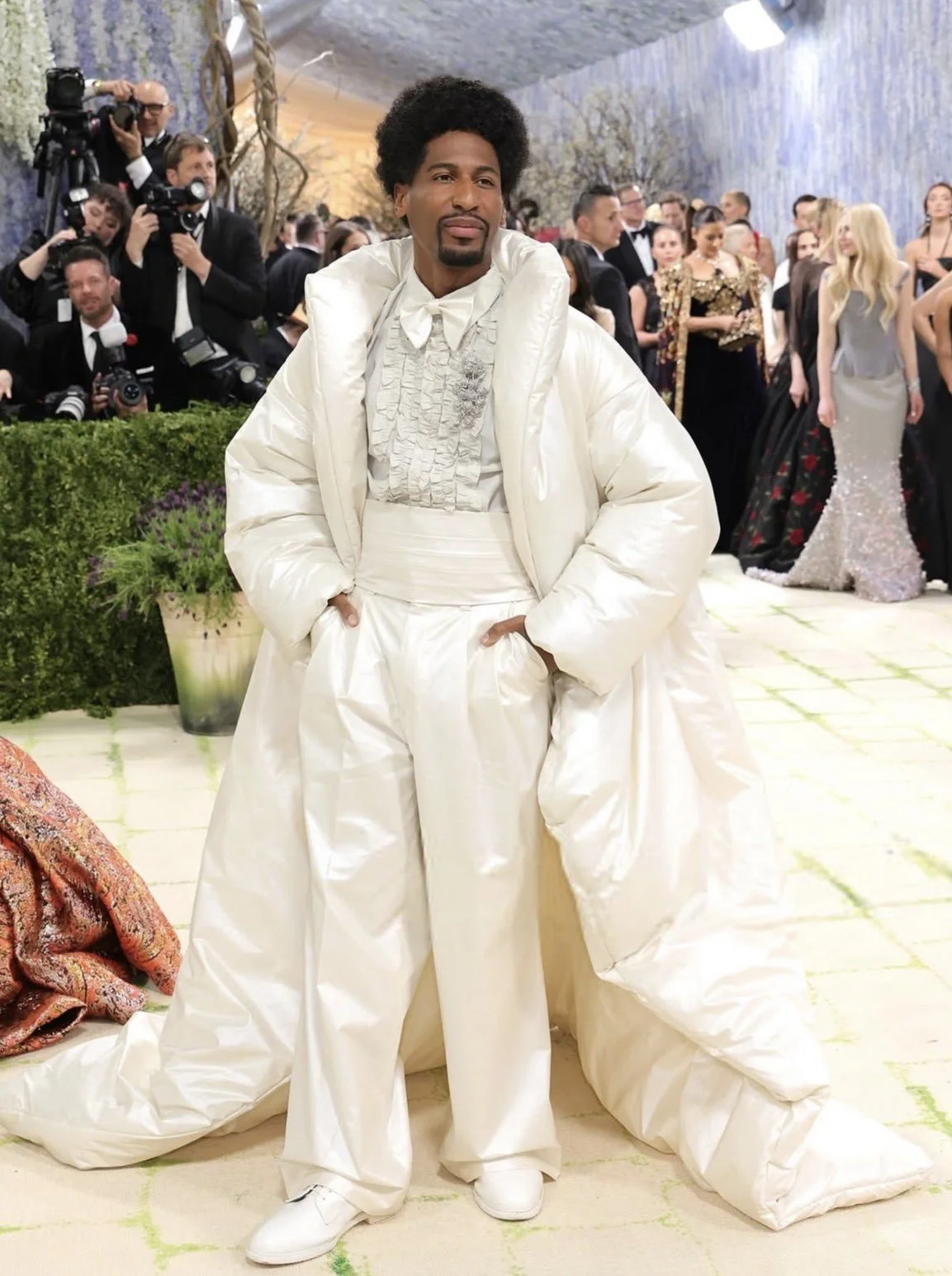
Jon Batiste wearing custom ERL
Jon Batiste
Designer/Look: Custom ERL by Eli Russell Linnetz, inspired by Barkley L. Hendricks’s painting Steve, with an all-white puffed silhouette and dramatic train.
Why it worked: Jon’s look stood out because it took a painting reference and made it feel soft, strange, and personal. The exaggerated white shape gave the look presence without relying on a standard suit, while the Hendricks reference kept it rooted in Black portraiture and style. It felt cozy, sculptural, and completely in his own world.
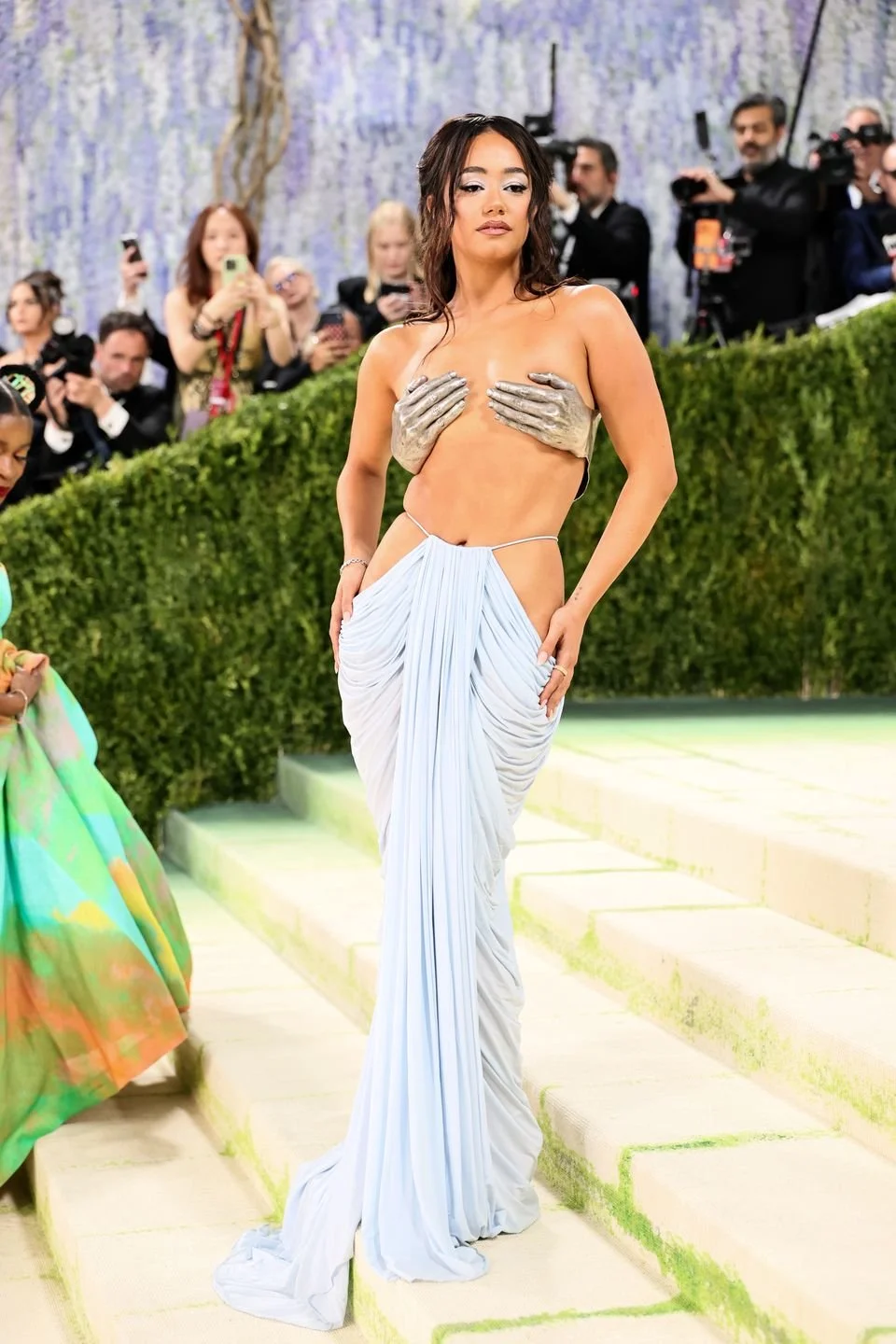
Léna Mahfouf (lena situations) wearing Burc Akyol
Léna Mahfouf
Designer/Look: Burc Akyol sculptural look featuring a cut-out draped skirt and silver molded hands forming the bustier, with minimal makeup and pale blue eyeshadow to complement the skirt.
Why it worked: This was one of the clearest body-as-art reads because the hands made the body part of the construction. The silver bustier could have easily gone gimmicky, but paired with the soft draped skirt and minimal styling, it landed as sensual, sculptural, and controlled. It felt like a fashion image built around tension: what is covered, what is exposed, and what the garment chooses to hold.
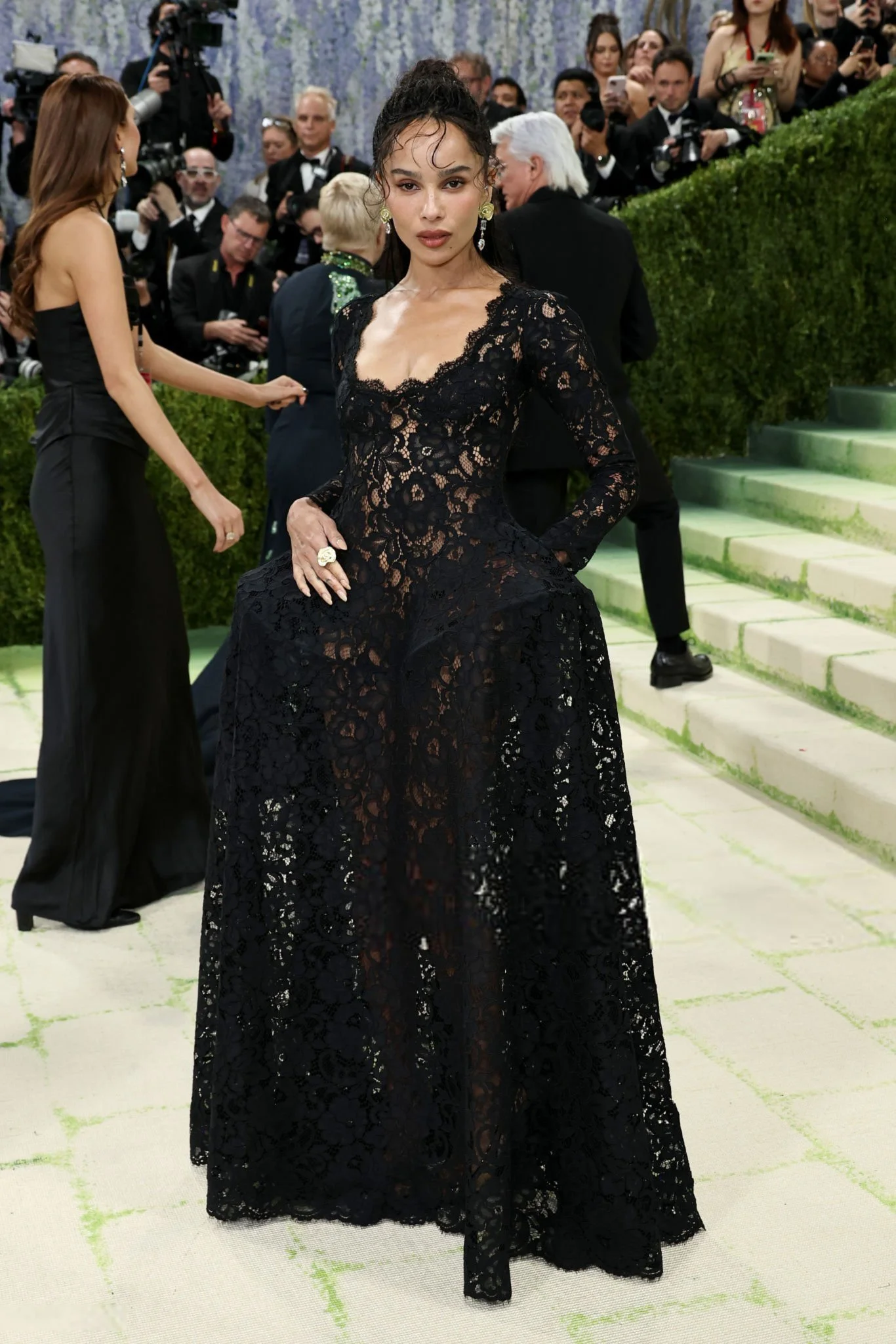
Zoë Kravitz wearing Saint Laurent
Zoë Kravitz
Designer/Look: Saint Laurent by Anthony Vaccarello black unlined guipure-lace dress with a basque waist, Jessica McCormack “Cry Baby” jewelry, and black Romy slingback pumps.
Why it worked: Zoë’s look was quiet, but the details carried it. The black lace, dropped waist, and unlined construction gave the dress a Renaissance softness without making it feel old-fashioned, while the “Cry Baby” jewelry added the surrealist art reference through diamond tears and eye motifs. It was restrained, romantic, and still sharp enough to hold the theme.
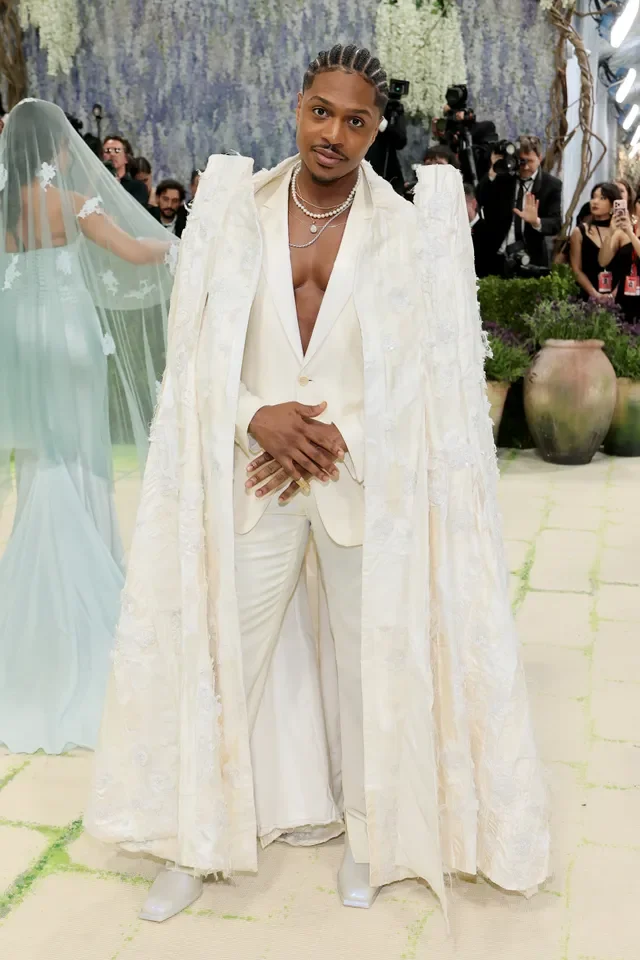
Ephraim Sykes wearing Who Decides War
Ephraim Sykes
Designer/Look: Who Decides War, styled by Carl Lation, featuring the cape from Look 41 of the brand’s Spring/Summer 2026 collection.
Why it worked: The cape is what gave this look its presence. The white-on-white texture, soft tailoring, and embellished surface made it feel ceremonial without doing too much. It was a quieter read of Costume Art, but still thoughtful — more about craft, layering, and how fabric can carry drama without needing a loud silhouette.
The strongest looks of the night were the ones that treated the theme as something to build from — through reference, construction, styling, beauty, and point of view. For us, Costume Art worked best when the body, garment, and idea all felt connected. That’s what fashion and art are all about.
